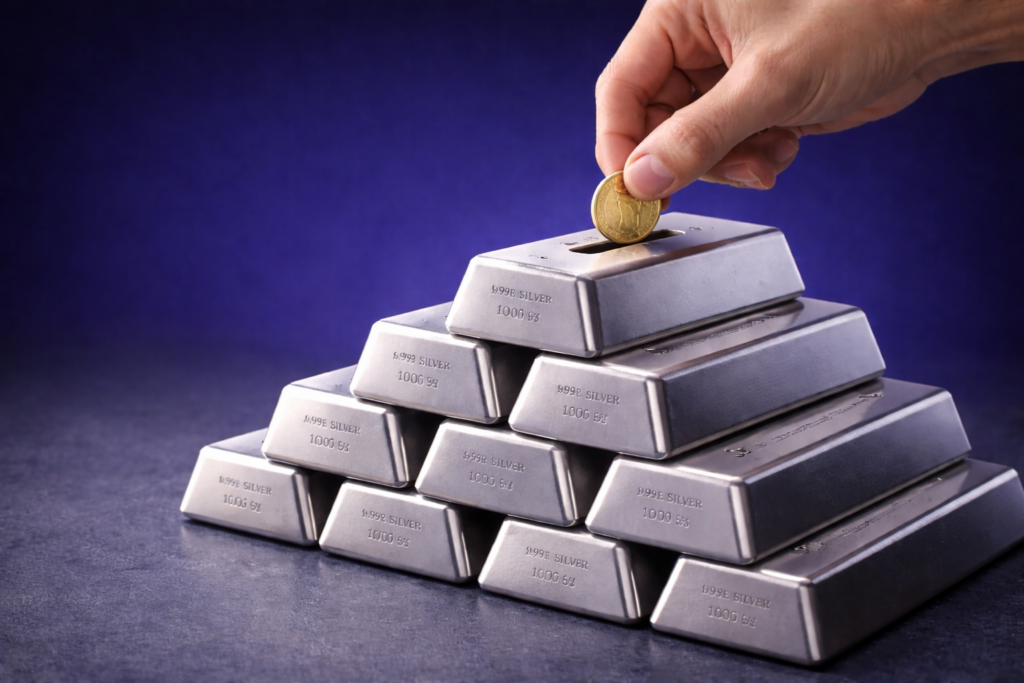
Silver has traditionally been a staple in Indian households, usually held as jewellery or coins. However, modern investors are moving towards Silver Exchange Traded Funds (ETFs) for a more efficient experience. These funds allow you to track the price of silver without the need for physical storage or worries about metal purity.
The popularity of these instruments is growing as investors look to diversify beyond equity and gold. By holding silver in a digital format, you can buy or sell units on the stock exchange just like company shares. This flexibility makes it a practical choice for those wanting exposure to precious metals.
Key Takeaway
- Silver ETFs offer a way to invest in silver prices without physical storage or security risks
- These funds are regulated by the Securities and Exchange Board of India (SEBI) and trade on the NSE and BSE
- Returns are subject to a tracking error, which is the difference between the fund’s performance and actual silver price movements
- For direct Silver ETF units, LTCG applies after 12 months at 12.5%. For Silver ETF Fund of Funds (FoFs), the LTCG holding period is 24 months
What is a Silver ETF?
A Silver ETF is a type of mutual fund that tracks the domestic price of physical silver. Instead of buying metal bars, you buy units of the fund. Each unit represents a specific weight of silver, typically 99.9% pure, which the fund house keeps in secure vaults.
Silver ETFs value their holdings using domestic polled spot prices published by Indian exchanges, primarily MCX, per a SEBI circular dated February 26, 2026. When the market price of silver rises, the Net Asset Value (NAV) of your ETF units generally increases. NAV is the market value of a single unit of the mutual fund scheme.
Top Silver ETFs in India
Several Asset Management Companies (AMCs) offer silver etf funds for Indian investors. Below are some of the prominent options available in the Indian market.
1. ICICI Prudential Silver ETF
This fund is one of the largest in the category. It aims to provide returns that closely correspond to the performance of physical silver in the domestic market.
- AUM: ₹14,511 crore
- Expense Ratio: 0.40%
- Pros: High liquidity on the exchange and a low expense ratio compared to peers.
- Cons: High price volatility inherent to the silver market.
2. Nippon India Silver ETF
Nippon India was among the first to launch a silver ETF in India. It is a popular choice for those who prefer high trading volumes on the stock exchange.
- AUM: ₹30,676 crore
- Expense Ratio: 0.56%
- Pros: Strong track record and easy to trade during market hours.
- Cons: Exit loads may apply if you invest through the Fund of Funds (FoF) route rather than the ETF directly.
3. Aditya Birla Sun Life Silver ETF
This ETF provides a digital gateway to silver prices with a focus on maintaining high purity standards in its physical underlying holdings.
- AUM: ₹2,854 crore
- Expense Ratio: 0.35%
- Pros: Professional management and transparency in holdings.
- Cons: Smaller AUM compared to the top two players might impact intraday liquidity.
4. Axis Silver ETF
Axis Mutual Fund offers this ETF for investors who want to use silver as a tactical tool in their portfolio.
- AUM: ₹1,853 crore
- Expense Ratio: 0.40%
- Pros: Extremely competitive expense ratio.
- Cons: Relatively newer fund compared to established commodity ETFs.
5. SBI Silver ETF
The SBI Silver ETF is backed by India’s largest public sector bank’s fund house, offering a sense of trust to conservative investors.
- AUM: ₹5,794 crore
- Expense Ratio: 0.40%
- Pros: Backed by a strong brand with a significant presence in the mutual fund industry.
- Cons: Trading volumes on the exchange may sometimes be lower than the most liquid silver ETFs, which can lead to slightly wider bid-ask spreads.
How to Invest in Silver ETFs in India
To understand how to invest in silver in India through the digital route, you need a Demat account. A Demat account is an account used to hold shares and securities in electronic format. This is the primary requirement for anyone wondering how to buy silver online without the risks of physical metal.
The process is quite straightforward. You search for the best silver ETF in India on your broker’s trading platform. You can then buy units at current market prices during exchange hours. Once the trade is executed, the units are credited to your Demat account within the standard settlement cycle.
Why Invest in Silver ETFs?
Investors often look for how to invest in silver to protect their money from inflation. Inflation is the rate at which the general level of prices for goods and services rises. These funds provide a layer of safety because they eliminate the risk of theft or loss associated with physical metal.
You do not need to pay for bank lockers or insurance. The purity of the underlying silver is also guaranteed by the fund house, as per SEBI regulations. These instruments can also serve as a hedge against market volatility in the equity segments.
Key Factors to Consider Before Investing
Market trends in silver are often more volatile than gold. This is because silver has significant industrial uses in electronics and solar panels. Therefore, its price can fluctuate based on both economic demand and investor sentiment.
You must also look at the tracking error. This is the difference between the returns of the ETF and the actual silver price. A lower tracking error indicates that the fund is performing its job efficiently. Additionally, check the expense ratio, which is the annual fee charged by the AMC to manage the fund.
Conclusion
Silver ETFs offer a convenient and regulated way to gain exposure to one of the world’s most useful metals. They remove the hurdles of physical storage while providing the liquidity needed to exit the investment quickly on the stock exchange.
Including silver in your portfolio can provide balance during periods of economic instability. By using these digital tools, you can participate in the silver market with transparency and ease.
FAQs on Best silver ETFs
The main benefit is the elimination of storage costs and security concerns. You do not need a bank locker, and there are no making charges involved. Additionally, you can sell your units instantly on the stock exchange, whereas selling physical silver can involve a visit to a jeweller and potential price deductions for purity.
Yes, silver is a volatile commodity and prices can swing sharply based on global industrial demand and geopolitical events. There is also a risk of tracking error, where the fund’s returns might slightly lag behind the actual silver price. It is wise to consult a professional before making large allocations to commodity funds.
ETF units currently trade in the ₹200–₹260 range. However, if you prefer the mutual fund route, Silver ETF FoFs allow SIPs starting from as low as ₹100 per month. This makes it accessible for small-town investors who may not have the budget to buy large silver bars or bricks. If you prefer the mutual fund route, many Silver Fund of Funds allow Systematic Investment Plans (SIPs) starting from ₹500 per month.
Performance is measured by how closely the fund’s NAV tracks the domestic spot price of silver. Investors compare the fund’s returns against a benchmark, typically the domestic price of silver based on MCX. A good ETF will show a very small tracking difference over a one-year period.
If you hold the ETF units for more than 12 months, the gains are considered Long Term Capital Gains (LTCG) and are generally taxed at 12.5% without indexation. If sold before 12 months, the gains are Short Term Capital Gains (STCG) and are added to your total income and taxed at your applicable slab rate. Tax rules can change with every Union Budget, so checking current regulations is necessary.
Disclaimer: Investments in securities markets are subject to market risks. Read all the related documents carefully before investing. The securities quoted are exemplary and are not recommended.