Most conversations around artificial intelligence focus on semiconductors, cloud computing, and data centers.
But one of the biggest bottlenecks in the AI economy is far less glamorous.
Transformers.
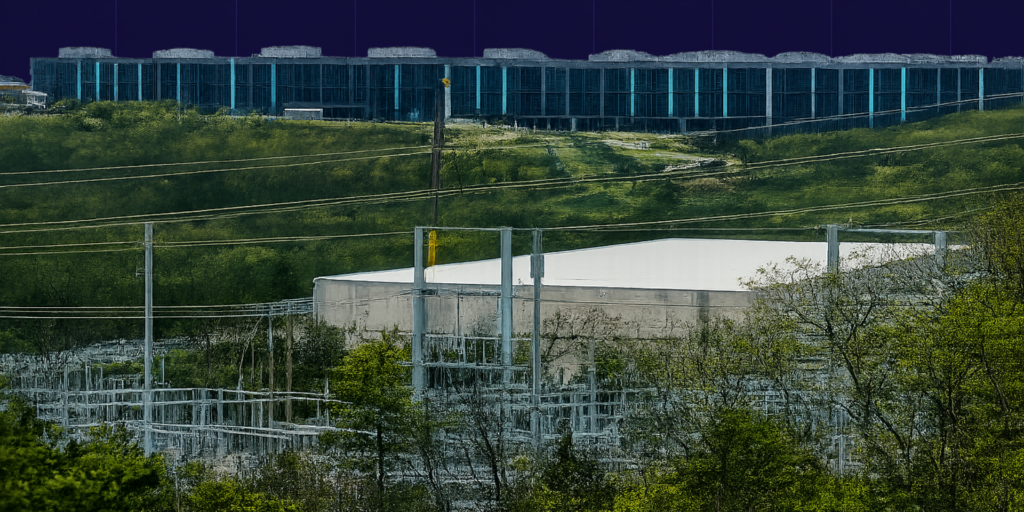
The physical devices responsible for stepping electricity up and down across the power grid have quietly become one of the most constrained pieces of infrastructure in North America. And as demand for electricity accelerates, that shortage is becoming impossible to ignore.
For investors accessing global themes through platforms like Appreciate, this matters because the next phase of the AI and electrification boom may depend less on software and more on the physical infrastructure connecting power to the real economy.
The Grid Was Not Built for This Level of Demand
North America’s power infrastructure was designed for a very different era.
Today, the grid is being pressured simultaneously by:
- artificial intelligence data centers
- electric vehicle charging networks
- industrial electrification
- renewable energy integration
- expanding residential power demand
All of these trends require transformers.
And right now, supply is not keeping up.
Lead times for large power transformers have stretched dramatically, in some cases approaching nearly three years. In an economy accustomed to instant scaling, critical grid hardware is suddenly operating on industrial timelines that feel decades old.
That creates a major execution problem for utilities, energy developers, and technology companies expanding power intensive infrastructure.
The Market Is Shifting Toward Smaller Distribution Infrastructure
One of the biggest changes happening inside the transformer market is where demand is coming from.
Historically, the focus was on massive high voltage transmission systems.
Today, growth is increasingly concentrated in smaller distribution transformers connected to:
- local AI infrastructure
- neighborhood EV charging
- decentralized energy systems
- edge computing facilities
This reflects a broader shift in how electricity is being consumed.
The economy is no longer building only centralized power corridors. It is building thousands of smaller power intensive nodes distributed across cities, industrial parks, and residential networks.
That transition changes which companies benefit most from the cycle.
Supply Chains Have Become a Strategic Problem
The transformer shortage is not just a manufacturing issue.
It is also a supply chain issue.
One of the key materials required for transformer production is grain oriented electrical steel, a highly specialized material with limited global suppliers. Trade restrictions and geopolitical tensions have tightened supply further.
As a result:
- equipment costs have risen sharply
- utilities are prioritising supply certainty over price
- domestic manufacturing capacity has become strategically valuable
This is creating a powerful advantage for companies with established North American production footprints.
In some ways, the transformer market is beginning to resemble the semiconductor market.
Local manufacturing matters more than ever.
Governments Are Pouring Money Into Grid Modernisation
Another important shift is happening at the policy level.
Governments are increasingly treating grid infrastructure as a national priority rather than a background utility issue.
In the U.S., major funding programs are now focused on accelerating transmission upgrades, reconductoring projects, and domestic power infrastructure expansion.
The reason is simple.
Without grid upgrades, large scale AI deployment and electrification become difficult to sustain.
Modern AI data centers consume enormous amounts of power. Utilities cannot support that growth without modernizing aging transmission and distribution systems.
That means transformer demand is increasingly tied directly to the broader AI economy.
Demand Is Growing Faster Than Manufacturing Capacity
Several companies have already announced plans to expand transformer manufacturing capacity across North America.
But there is a problem.
Building industrial manufacturing infrastructure takes time.
Many new facilities remain in early construction or permitting phases, while demand continues accelerating today. Industry estimates suggest supply chain constraints may remain tight well into 2027 and beyond.
This creates what investors often look for in industrial cycles:
- structural demand
- constrained supply
- pricing power
- long order backlogs
In other words, conditions that can support stronger margins and durable earnings growth for manufacturers positioned correctly.
The Real Opportunity May Be in Distribution Hardware
One of the most interesting parts of this cycle is that the opportunity extends beyond large transformers themselves.
The entire distribution ecosystem is benefiting.
That includes:
- power management systems
- switchgear providers
- utility hardware manufacturers
- energy infrastructure suppliers
- modular power equipment companies
As electricity demand becomes more distributed, modular infrastructure becomes increasingly important.
Instead of waiting years for one massive installation, utilities and operators are increasingly deploying scalable local infrastructure incrementally.
This creates a larger total addressable market across multiple layers of the power ecosystem.
Why Wall Street Is Paying Attention to Industrial Companies Again
For years, industrial infrastructure businesses were often treated as slow growth sectors.
That perception is changing.
Companies tied to electrification and grid expansion are increasingly being viewed as long duration growth stories rather than traditional cyclical manufacturers.
Businesses such as Eaton, GE Vernova, Hubbell, and Schneider Electric are benefiting from this revaluation because they sit directly inside the infrastructure layer supporting:
- AI expansion
- electrification
- energy security
- industrial modernization
This shift matters because markets tend to reward industries positioned at critical bottlenecks.
And right now, the grid itself has become one of the largest bottlenecks in the modern economy.
The AI Economy Depends on Physical Infrastructure More Than Expected
One of the most important lessons from the current cycle is that software alone cannot scale economies.
Physical infrastructure still matters enormously.
AI systems require:
- electricity
- cooling
- transmission capacity
- distribution infrastructure
- industrial hardware
Without those systems, even the most advanced software models cannot operate at scale.
That is why the market is increasingly paying attention to what might once have seemed like unexciting industrial components.
The infrastructure layer has become strategically important again.
Turning Electrification Into an Investment Theme
For investors, the key takeaway is that the AI and electrification boom is creating opportunities beyond traditional technology stocks.
The companies building and modernizing the physical grid may become just as important as the software companies consuming the power.
Platforms like Appreciate help investors access many of these U.S. listed infrastructure and electrification leaders, making it easier to participate in the industrial side of the next economic cycle.
Because increasingly, the future of AI depends not only on computation.
It depends on whether the grid can keep up.
Conclusion
The transformer shortage may sound like a niche industrial problem.
It is not.
It sits directly at the intersection of artificial intelligence, electrification, infrastructure, and energy security.
As demand for electricity accelerates, the physical constraints of the grid are becoming one of the defining economic stories of the next decade.
And for investors, that changes where opportunities may emerge next.
Because sometimes the most important technologies are not the newest ones.
They are the old systems the modern economy suddenly cannot function without.
Disclaimer: Investments in securities markets are subject to market risks. Read all related documents carefully before investing. The securities and examples mentioned above are only for illustration and are not recommendations.