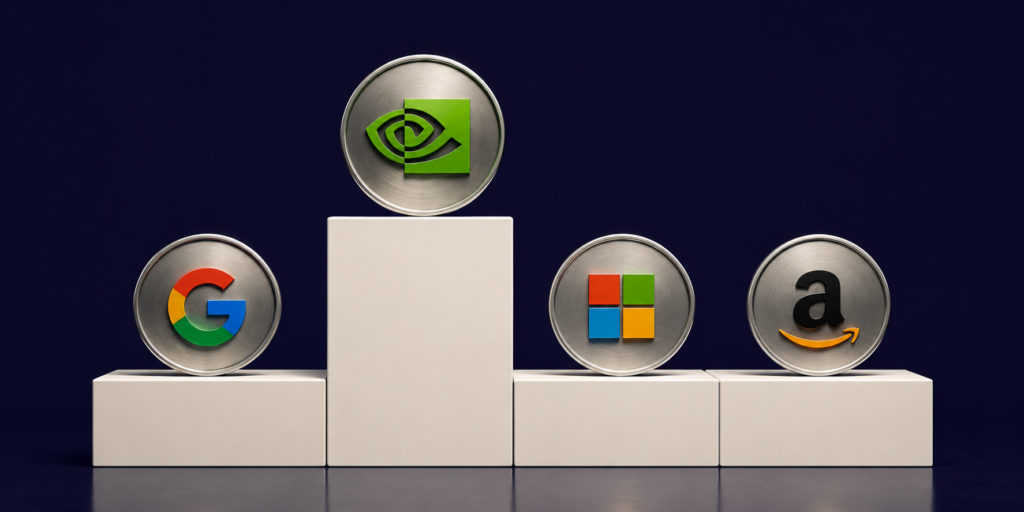
For much of the past two years, the U.S. stock market appeared unstoppable. Artificial intelligence, cloud computing, and mega-cap technology companies drove most of the gains, helping the S&P 500 reach new highs. But beneath the surface, the market was becoming increasingly concentrated. By early 2026, the ten largest companies in the S&P 500 accounted for nearly 40% of the entire index, meaning a benchmark designed to represent hundreds of companies had become heavily dependent on a handful of technology giants. Then something unusual happened. Small-cap stocks, represented by the Russell 2000, started outperforming the S&P 500—not during a market crash, but during a broad market recovery. This raised an important question: were investors suddenly embracing small caps, or were they beginning to look beyond the concentration risk developing within the U.S. market? Watch the video below to understand what is driving the Russell 2000’s outperformance and whether this trend could continue.
The answer starts with how these two indices are constructed. The Russell 2000 is a pure small-cap benchmark that continuously refreshes itself as companies grow, shrink, or leave the small-cap universe. In contrast, the S&P 500 is weighted by market capitalization, meaning the largest companies automatically occupy a larger share of the index as their valuations rise. Over the past two years, the rapid growth of AI-related businesses caused technology stocks to dominate the benchmark, with the sector accounting for roughly a third of the index. As market leadership became increasingly narrow, investors began searching for opportunities beyond the largest technology companies. This shift became visible in early 2026, when small-cap and value-oriented stocks started outperforming large-cap growth companies, signaling that market participation was broadening.
Valuations and earnings expectations further strengthened the case for small caps. By early 2026, the Russell 2000 traded at a meaningful discount to the S&P 500, reflecting years of investor preference for large-cap technology stocks. At the same time, earnings expectations for small-cap companies began improving, particularly in sectors such as industrials, financials, and consumer discretionary. Lower interest rates also helped the outlook, as smaller companies tend to be more sensitive to borrowing costs and financing conditions. As concerns about a financing squeeze faded, investors became increasingly willing to allocate capital to businesses that had been overlooked during the AI-driven rally.
The recent outperformance of the Russell 2000 does not necessarily mean small caps are replacing large caps as market leaders. Instead, it suggests that the U.S. stock market is becoming broader after an extended period of concentration. Investors have not abandoned mega-cap technology companies, but they are increasingly looking for opportunities across a wider range of sectors and businesses. If financing conditions continue improving and earnings growth broadens beyond technology, small caps could remain an important beneficiary. Ultimately, the Russell 2000’s strength is less a story about investors turning away from the S&P 500 and more a reflection of a healthier market where leadership is no longer concentrated in just a handful of stocks.
Disclaimer: Investments in securities markets are subject to market risks. Read all related documents carefully before investing. The securities and examples mentioned above are only for illustration and are not recommendations.