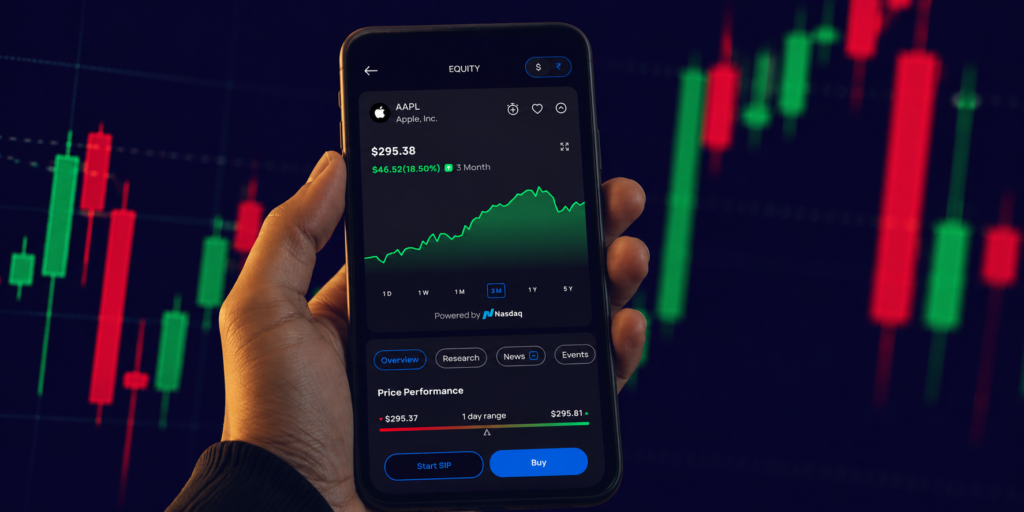
A large portion of trades on Indian exchanges like NSE and BSE are executed through automated systems rather than manual clicks. This shift has changed how trading works in modern markets.
Algo trading refers to using computer programs to execute trades based on predefined rules, while high-frequency trading is a much faster and more specialised subset of the same broad theme. These rules analyse market factors such as price, volume, timing, or technical indicators and place orders automatically.
In this guide, we will explain what is algo trading, how it works, and the common strategies used in the stock market.
Key points to address
Before diving deeper, here are a few things that define algo trading:
- Speed: Algorithms can analyse market data and place orders within milliseconds.
- Automation: Trades are executed automatically once predefined conditions are met.
- Emotion-free execution: Strategies run based on rules rather than human judgement.
- Scalability: Multiple strategies can run simultaneously across different assets.
- Regulatory oversight: In India, SEBI regulates algorithmic trading, especially when retail traders use third-party algo platforms.
What Is Algo Trading? Definition and Meaning
Algo trading, short for algorithmic trading, is a method of buying and selling financial securities using computer programs that follow predefined rules.
Instead of manually placing orders, traders design stock market algorithms that monitor market data and execute trades automatically when specific conditions are met. These rules can be based on price movements, technical indicators, trading volume, timing, or combinations of multiple factors.
How Does Algo Trading Work? A Step-by-Step Breakdown
At a basic level, algo trading follows a simple process where market data is analysed and rules are checked, often using intraday trading indicators as signal inputs.
1. The Basic Mechanics of Algorithmic Trading
A trading algorithm receives live market data such as price, volume, and time-based signals through a broker’s data feed. It continuously checks this data against predefined rules built into the system.
If the conditions match, the algorithm sends a buy or sell order directly to the exchange through the broker’s API. The entire process runs automatically and can react within milliseconds, allowing stock market algorithms to execute trades much faster than manual trading.
2. A Simple Algo Trading Example
Consider a moving average crossover strategy using a 20-day and a 50-day moving average.
- Buy: when the 20-day average moves above the 50-day average
- Sell: when the 20-day average moves below the 50-day average
The algorithm keeps calculating these averages from live prices and triggers trades when the crossover occurs.
Key Components Required for Algo Trading
The workflow typically follows this sequence:
- Define a trading strategy
- Convert it into code
- Backtest it on historical data
- Connect to a live market data feed
- Link the program to a broker API for order execution
- Apply risk controls such as stop-loss and position limits.
Algo Trading vs Manual Trading – Key Differences
Both algo trading and manual trading aim to capture market opportunities, but the execution process is very different. Here’s how:
| Factor | Algo Trading | Manual Trading |
| Execution speed | Orders executed in milliseconds | Slower execution |
| Decision-making | Rule-based system | Human judgement |
| Emotional influence | No emotional bias | Fear and greed often affect decisions |
| Scalability | Multiple strategies can run simultaneously | Limited to what a trader can monitor |
| Consistency | Strategy runs exactly as programmed | Execution can vary |
Top Algo Trading Strategies Used in the Stock Market
Different algorithmic trading strategies are built around specific market behaviours. Some focus on trends, while others exploit short-term price inefficiencies.
1. Trend Following Strategy
These strategies aim to capture sustained price movements using indicators like moving averages, MACD, or momentum signals. A common rule is to buy when price moves above a key average and exit when momentum weakens. This works best in clear directional markets.
2. Arbitrage Strategy
Arbitrage focuses on price differences between related instruments. In India, this often involves cash–futures arbitrage on NSE or BSE. The algorithm buys in one market and sells in another when a gap appears, capturing the spread instantly.
3. Mean Reversion Strategy
This approach assumes prices move back to their average after extreme swings. Indicators like Bollinger Bands or RSI help identify overbought or oversold levels, where the algorithm places trades expecting a reversal.
4. Scalping with Algorithms
Scalping targets small price moves across many trades. It depends on fast execution and low latency, where even minor gains add up over multiple trades, making it especially relevant for readers exploring day trading.
5. Options Strategy Automation
Algorithms can automate options strategies using inputs like VIX, implied volatility, and Greeks. Setups such as straddles or strangles are executed with predefined entry, exit, and stop-loss rules, reducing manual tracking.
Benefits of Algo Trading
Algo trading helps execute trades faster and with more consistency compared to manual methods.
- Speed and precision: Orders are placed in milliseconds, reducing delays and improving accuracy.
- No emotional bias: Trades follow fixed rules, avoiding impulsive decisions.
- Multiple strategies: You can run different strategies across stocks or segments at the same time.
- Backtesting: Strategies can be tested on past data before using real money.
- Lower slippage: Automated execution improves the chances of getting expected prices.
Risks and Limitations of Algo Trading
While algorithmic trading offers clear advantages, it also comes with important risks.
- Technology dependence: System errors, API issues, or internet failures can disrupt trades.
- Overfitting: Strategies that perform well on historical data may fail in live markets.
- Market shocks: Algorithms cannot always react to sudden, unpredictable events.
- Regulatory requirements: Traders must follow SEBI rules, especially when using third-party platforms.
Algo Trading vs High-Frequency Trading (HFT): What’s the Difference?
High-frequency trading (HFT) is a specialised form of algo trading, but the two are not the same. The main difference lies in speed and scale. HFT systems operate in microseconds and rely on advanced infrastructure like colocation servers placed near exchange systems.
In contrast, standard algorithmic trading used by retail traders runs on APIs or cloud setups and executes over seconds or minutes. HFT is typically used by large institutions with significant capital, while retail traders use simpler, lower-cost algo setups.
SEBI Regulations on Algo Trading in India
Algo trading is legal in India, but it is regulated by SEBI, so beginners should first test strategies in a mock trading session before going live. Recent guidelines require that retail algo strategies, especially those offered through third-party platforms, must be approved by exchanges.
Each algorithm is assigned a unique Algo ID to track its activity. Brokers are also responsible for monitoring and controlling access to such systems, including platforms connected via APIs.
Is Algo Trading Right for You? (Retail Investor Checklist)
Before starting algo trading, it’s important to assess whether it fits your current skill level and setup.
1. Who Should Consider Algo Trading?
- Traders who already have a tested manual strategy and want consistent execution
- Those comfortable with basic Python or broker APIs
- Investors looking to remove emotional decisions and follow rule-based systems
2. Who Should Avoid Algo Trading ?
- Complete beginners with little or no understanding of the stock market
- Those without reliable internet or system setup for continuous execution
- Traders who are not willing to backtest and refine strategies before going live
How to Get Started with Algo Trading in India
Getting started with algo trading requires a structured approach. Jumping straight into automation without preparation often leads to losses.
Step 1 – Learn the Basics of Trading First
Focus on building a clear strategy. Automation only works if the underlying logic is sound, which is why beginners should first learn how to learn trading before automating decisions.
Step 2 – Choose a Broker That Supports API Trading
Look for brokers offering API access, good documentation, and reliable market data feeds.
Step 3 – Learn Python or Use a No-Code Platform
Python is widely used for algorithmic trading, especially with libraries like pandas and numpy. No-code platforms can help if you don’t want to code.
Step 4 – Build and Backtest Your Strategy
Test your strategy on at least 1–2 years of historical data to understand its performance.
Step 5 – Go Live with Paper Trading First
Start with simulated trades before using real capital. This helps identify gaps without financial risk.
Common Mistakes Beginners Make in Algo Trading
Many beginners struggle with algo trading due to avoidable errors:
- Over-optimising strategies to fit past data (curve-fitting)
- Skipping paper trading and going live too early
- Ignoring slippage and transaction costs during backtesting
- Using unregulated third-party algo platforms
- Not setting proper stop-loss or drawdown limits
- Treating algo trading as passive income without monitoring
Conclusion
Algo trading combines a trading strategy with automated execution, allowing trades to be placed faster and more consistently than manual methods. By using predefined rules, algorithmic trading helps remove emotional decision-making, but understanding trading psychology still matters when designing and managing strategies.
However, it still requires proper testing, risk management, and regular monitoring. For traders willing to learn the technology and build disciplined strategies, algo based trading can become a powerful tool for participating in modern financial markets.
Disclaimer: Investments in securities markets are subject to market risks. Read all the related documents carefully before investing. The securities quoted are exemplary and are not recommended.
FAQ on Algo Trading
Algo trading is the use of computer programs to automatically buy and sell stocks based on predefined rules. These rules track market data like price or volume and execute trades without manual intervention.
Yes, algo trading is legal in India, but it must comply with SEBI regulations. Traders typically access it through brokers that offer API-based trading or approved platforms.
There is no fixed amount required. You can start with a smaller capital, especially while testing strategies through paper trading. The required amount depends on your strategy and the instruments you trade.
Beginners can learn algorithmic trading, but it’s better to first understand basic trading concepts and develop a strategy before automating it.
Algo trading uses automated systems to execute trades based on rules, usually over seconds or minutes. HFT is a faster version that operates in microseconds and is mainly used by large institutions.
Python is the most commonly used language for algo trading due to its simplicity and strong libraries like pandas and numpy. It is widely used by retail traders to build and test strategies.
Disclaimer: Investments in securities markets are subject to market risks. Read all the related documents carefully before investing. The securities quoted are exemplary and are not recommendatory.