If you’re thinking about starting trading but aren’t sure where to begin, a mock trading session is often the easiest first step. For a full beginner roadmap on how to learn trading, this guide fits naturally here. It lets you experience how the market works without risking your own money.
In this guide, we’ll break down what mock trading sessions are, how they work, and why they’re useful before moving to real trading.
Key- Takeaway
- A mock trading session is a simulated trading environment using virtual money.
- It mirrors real market conditions, including price movements and order execution.
- Helps beginners learn without financial risk.
- Allows you to test strategies before applying them in real markets.
- Builds confidence and improves decision-making over time.
What is a Mock Trading Session?
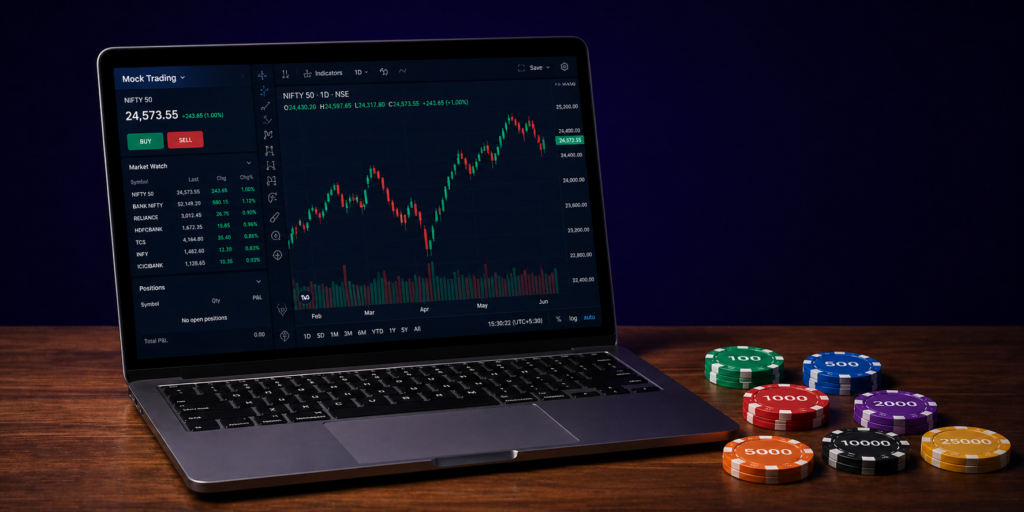
A mock trading session is a practice environment where you can place trades in real-time market conditions using virtual money. It mirrors how actual trading works—right from selecting stocks to placing buy and sell orders—without any financial risk.
These sessions are designed to help you understand how the market behaves during live hours. You can track price movements, execute trades and see how your decisions play out, just as you would in a real trading account.
The only difference is that your capital is simulated, so mistakes don’t cost you real money.
How Does Mock Trading Work?
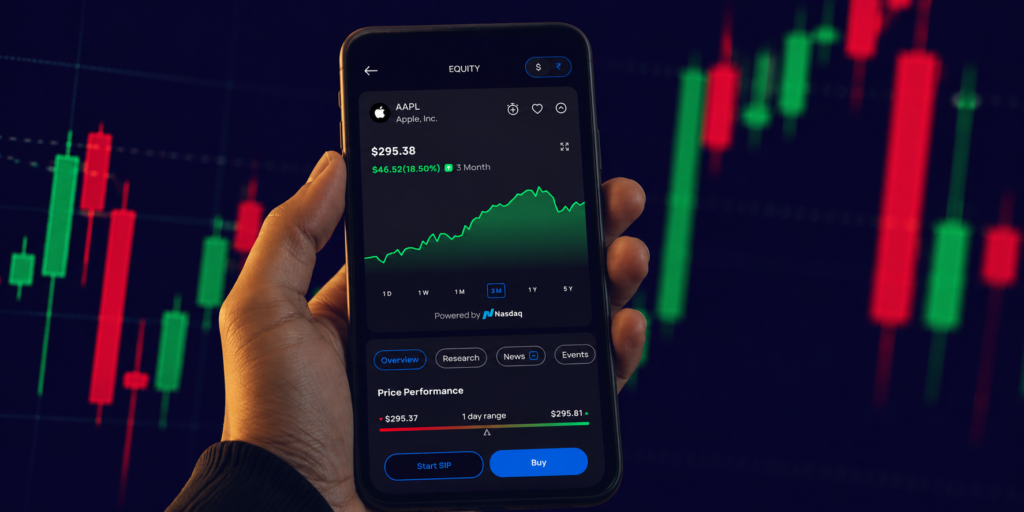
Mock trading platforms are built to closely replicate real market conditions, just like live trading in stock markets, making the learning process practical.
- You start with a fixed amount of virtual funds provided by the platform
- Stock prices and charts reflect real-time or near-real-time market data
- You can place different types of orders: buy, sell, or hold
- Your portfolio updates based on your trades, showing profits or losses
Over time, this helps you understand how trades are executed, how prices move and how your decisions affect outcomes.
Benefits of Mock Trading Sessions
Mock trading gives you a practical way to learn without the pressure of losing money. Here’s how it helps:
1. Risk-Free Learning Environment
You can trade without putting any real money at stake. This makes it easier to experiment, make mistakes, and learn how the market works without financial consequences.
2. Understanding Market Mechanics
Mock trading helps you get familiar with how orders are placed, how prices move and how trades are executed. It gives you hands-on exposure to the basics that are hard to grasp through theory alone.
3. Strategy Testing
You can try different trading strategies and see what works. Whether it’s short-term trades or holding positions, mock trading lets you test your approach before applying it in real markets.
4. Emotional Control
Trading often involves decision-making under pressure. While mock trading doesn’t fully replicate real emotions, it still helps you build discipline and avoid impulsive actions.
5. Performance Analysis
You can track your trades, review outcomes and identify patterns in your decisions. This helps you understand what you’re doing right and where you need to improve before moving to real trading.
Who Should Use Mock Trading Sessions?
Mock trading isn’t just for beginners. It’s useful for anyone who wants to practice before putting real money at risk.
- Beginners: If you’re new to trading, mock sessions help you understand the basics—how to place orders, read charts and track positions—without pressure.
- Active traders testing new strategies: Even experienced traders use mock trading to try new setups or approaches before applying them in live markets.
- Students and learners: It’s a practical way to learn how markets function beyond theory.
- Investors switching styles: If you’re moving from long-term investing to short-term trading (or vice versa), mock trading helps you adjust without taking unnecessary risks.
Common Mistakes in Mock Trading
Mock trading is useful, but only if you take it seriously. A few common mistakes can limit what you actually learn.
- Treating it like a game: Since there’s no real money involved, it’s easy to take random trades. This defeats the purpose of learning.
- Ignoring risk management: Many users take oversized positions because there’s no downside. This builds habits that don’t work in real trading.
- Not following a strategy: Jumping between trades without a plan makes it hard to understand what’s working.
- Overtrading: Placing too many trades without clear reasoning can distort your results.
- Not reviewing performance: If you don’t analyze your trades, you miss out on the main benefit—learning from your decisions.
Choosing the Right Platform
The platform you use can make a big difference in how effective your practice is. Some features to look out for are:
- Real-time or near real-time data: The closer the data is to live market conditions, the more useful your learning will be.
- Simple and clear interface: A clean interface helps you focus on trading instead of figuring out how the platform works.
- Order type availability: Look for platforms that allow different order types, like market and limit orders, so you can practice properly.
- Performance tracking tools: Features like trade history, profit/loss tracking and reports help you review and improve.
- Ease of access: Mobile apps or web platforms make it easier to practice consistently.
Conclusion
Mock trading is a simple way to understand how markets work before entering real investing journeys. It helps you learn the basics, test strategies, and build confidence through practice.
That said, the real value comes from taking it seriously. If you treat mock trading like actual trading – following a plan, managing risk, and reviewing your performance—you’ll be far better prepared when you move to live markets.
Start small, focus on learning, and use mock trading as a stepping stone, not a shortcut.
FAQs on Mock Trading Session
Yes, you can place buy and sell orders just like in real trading. The only difference is that you’re using virtual money, so there’s no actual financial risk involved.
Mock trading is a simulated trading environment where you trade using virtual funds. It mirrors real market conditions, helping you learn how trading works without risking your own money.
Yes, selling works the same way as buying. You can exit positions, book profits, or cut losses—just like you would in a real market scenario.
Yes, both terms are often used interchangeably. They refer to practicing trades in a simulated environment without using real money.
Mock trading helps you understand how orders work, how prices move, and how to manage trades. It also allows you to test strategies and build confidence before entering real markets.
You can lose virtual money, but not real money. However, consistent losses in mock trading can highlight gaps in your strategy, which is useful before moving to real trading.
Disclaimer: Investments in securities markets are subject to market risks. Read all the related documents carefully before investing. The securities quoted are exemplary and are not recommended.