Dive into the financial concept of the ex-dividend date, an essential term for investors looking at dividend-paying stocks. For many in India, investing in the share market is often about two things: capital appreciation and regular income through dividends. Dividends are a portion of a company’s profit distributed to its shareholders. However, you cannot simply buy a stock today and expect a dividend tomorrow. There is a specific timeline you must follow.
Find out about the significance of the ex-dividend date and how it affects stock price, as well as ways to calculate ex-dividend dates for your stocks. Knowledge of when you can buy stocks will make all the difference between earning some money and making none at all. This is a complete guide that seeks to educate both new and veteran investors alike.
Key Takeaway
- Ex dividend refers to a stock trading without the value of its next dividend payment.
- You must buy the stock before this date to be eligible for the declared payout.
- On this date, the stock price typically drops by the amount of the dividend.
- The ex dividend date and record date are closely linked but serve different purposes.
What is an Ex-Dividend Date?
To understand what the ex-dividend date is, we must look at the word “ex,” which means “without.” Therefore, a stock that is “ex-dividend” is trading without the right to the upcoming dividend. It is the first day on which the stock trades without the value of the next dividend payment included in its price. If you buy the stock on or after this date, the previous owner receives the dividend, not you.
Ex Date is basically the “cut-off” for new buyers. With the present T+1 settlement cycle in effect from India (as from 2024), the ex-dividend date and the record date occur on the same day. You will be able to claim your dividend only if you have bought the stock one day prior to the ex/dividend date. The record date is the day the company checks its books to see who is officially a shareholder. Because it takes one day for your name to appear in the company’s records after a purchase, under T+1, you must buy the stock before the ex-dividend date (i.e., by the close of the previous trading day). Since ex-date now equals record date in India, buying on the ex-date itself means you will not receive the dividend.
The significance of this particular date within the stock markets is huge. It facilitates the smooth transition of wealth in the hands of the buyer and seller. In the absence of this important aspect, arguments would keep arising regarding whose right it is to claim dividends during this transition period.
How Does the Ex-Dividend Date Affect Stock Prices?
A stock’s ex-dividend date usually comes with a visible price adjustment. Think of it logically: if a company is worth ₹1,000 per share and it decides to pay out ₹20 as a dividend, that ₹20 is leaving the company’s bank account. Consequently, the company is now worth ₹20 less per share. On the morning of the ex-dividend date, the stock exchange automatically adjusts the opening price downward by approximately the dividend amount.
Though the market conditions, such as high demand or good news, can drive the price of the stock up, the “base” price is set a little bit lower. As an illustration, in case the closing price for a stock on the previous day is ₹500 and the dividend is ₹10, then the opening price on the following day is expected to be ₹490. This is done in order not to allow “manipulation” of the system.
Most trading techniques adopted during these times tend to employ what is known as the “dividend capture technique”. There have been instances where traders attempt to purchase stocks prior to the ex-dividend date and then sell the stocks after that. Unfortunately, with the resulting decline in prices, such an approach could prove very risky.
Where to Find the Ex-Dividend Date?
Finding a stock’s ex-dividend date is relatively simple in the digital age. The primary source is official company announcements. When a company’s Board of Directors meets and declares a dividend, they are legally required to inform the National Stock Exchange (NSE) and Bombay Stock Exchange (BSE). These exchanges list these “corporate actions” on their official websites for the public to see.
1. Through Brokerage Platforms
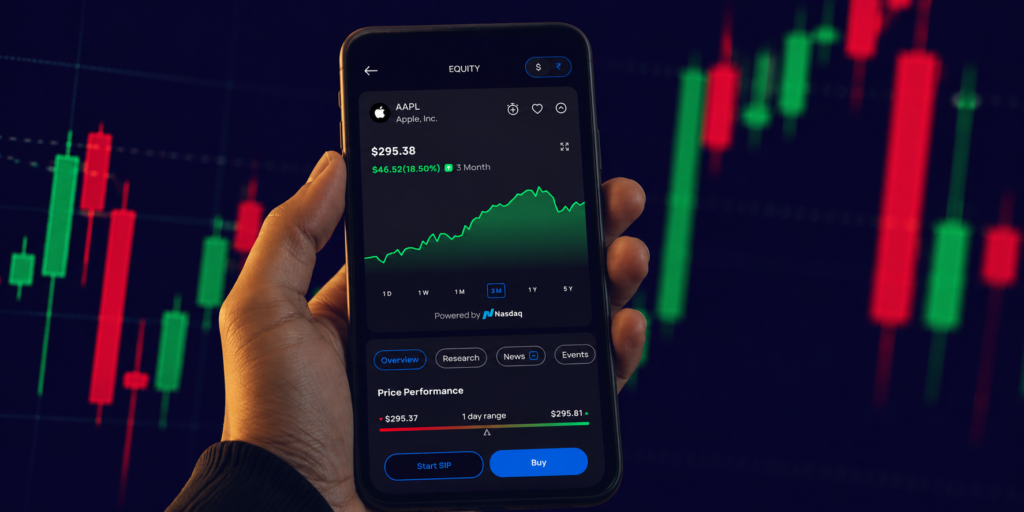
Online brokers provide ex-dividend information directly within their apps. When you look at the “Events” or “Corporate Actions” tab for a specific stock, you will see the amount and the ex date, meaning clearly listed. Most modern platforms also allow you to set up alerts. You can receive a notification a few days before the ex-dividend date for any stock in your watchlist or portfolio.
2. Reading Annual Reports and Financial Statements
For those who prefer a deeper look, annual reports are the best source. Companies usually discuss their dividend policy in the “Director’s Report” or “Financial Highlights” section. While the specific date for a future dividend is not in an annual report (as dates are announced closer to the event), the report will show the company’s history of dividend payments and their frequency, such as “interim” or “final” dividends.
How to Interpret the Ex-Dividend Date?
When you ask what the ex-dividend date is, you are essentially asking about eligibility. To get the dividend, you must be a “shareholder of record.” Because of the T+1 settlement in India, you must own the shares before the ex-dividend date begins. If the ex-dividend date is Wednesday, you must buy the shares by Tuesday evening (before the market closes) to be eligible.
The role in a dividend capture strategy is to identify stocks that historically recover their price drop very quickly. Some high-quality blue-chip companies in India often see their stock prices bounce back within a few days of the ex-dividend date. However, this requires careful analysis of the company’s fundamentals and the overall mood of the market.
Why is Knowing the Ex-Dividend Date Important for Investors?
Knowing this date significantly influences investment decisions. If you are planning to invest a large sum in a stock for the long term, you might choose to wait until the ex-dividend date to buy. Why? Because the stock price will be lower on that day. While you won’t get the current dividend, you are getting the shares at a “discounted” price, which might be better for your long-term capital gains.
For short-term traders, the ex-dividend date and record date are the pillars of their timing strategy. Buying too late means missing the income they were targeting. Furthermore, dividends in India are taxable in the hands of the investor as per their income tax slab. Investors must calculate if the dividend income is worth the potential tax liability compared to simply benefiting from a lower purchase price after the date has passed.
Ultimately, this date is a marker of corporate health. Companies that consistently announce ex-dividend dates and honour their payouts are often viewed as stable and cash-rich. For an investor in a small town or a large city, this consistency provides a sense of security and a predictable stream of passive income.
Conclusion
The ex-dividend date is one of the most important dates when it comes to the stock investing process. This is because the date will affect the ownership of payments and the price that the stock is assigned on this particular date. Learning about the ex-dividend date and how it affects the record date is crucial to successful trading.
Regardless of whether you are looking for steady cash flow or the lowest possible price for a long-term investment, it would be wise to keep track of the dividend schedule. The advice concerning taking note of the ex-dividend date is more than simply about the dividend itself; rather, it is about your total return.
FAQs on ex-dividend date
If you buy a stock on the ex-dividend date, you will not receive the upcoming dividend. The dividend will instead go to the seller who owned the stock before that date. However, you will likely be able to buy the shares at a slightly lower price because of the market’s downward adjustment.
It is very rare for an ex-dividend date to change once it is officially communicated to the stock exchanges. However, if there is a massive market disruption or a legal hurdle that delays the record date, the exchange may adjust the ex-dividend date accordingly.
No, only companies that choose to pay dividends have an ex-dividend date. Many growth-oriented companies, especially in the tech sector, prefer to reinvest all their profits back into the business rather than paying them out to shareholders.
The ex dividend date and record date are different steps in the same process. The ex-dividend date is when the stock price adjusts and the “cutoff” for buyers happens. The record date (usually one day later) is when the company actually looks at its list of shareholders to finalise who receives the check.
Yes, you can. If you held the stock until the end of the day before the ex-dividend date, you have met the requirements. You can sell your shares on the ex-dividend date itself and you will still be entitled to receive the dividend, as you were the “owner of record” at the necessary time. It is always helpful to consult a professional for your specific tax and investment situation.
Disclaimer: Investments in securities markets are subject to market risks. Read all related documents carefully before investing. The securities and examples mentioned above are only for illustration and are not recommendations.