WWDC 2026 opened on June 8 at Apple Park in Cupertino — and unlike the previous year’s conference, which had focused almost entirely on Liquid Glass as a design language while AI remained conspicuously absent, this year’s keynote placed artificial intelligence at the centre of every major announcement. Apple formally unveiled iOS 27, iPadOS 27, macOS Golden Gate 27, watchOS 27, and visionOS 27, alongside the feature that had been two years in the making: Siri AI.
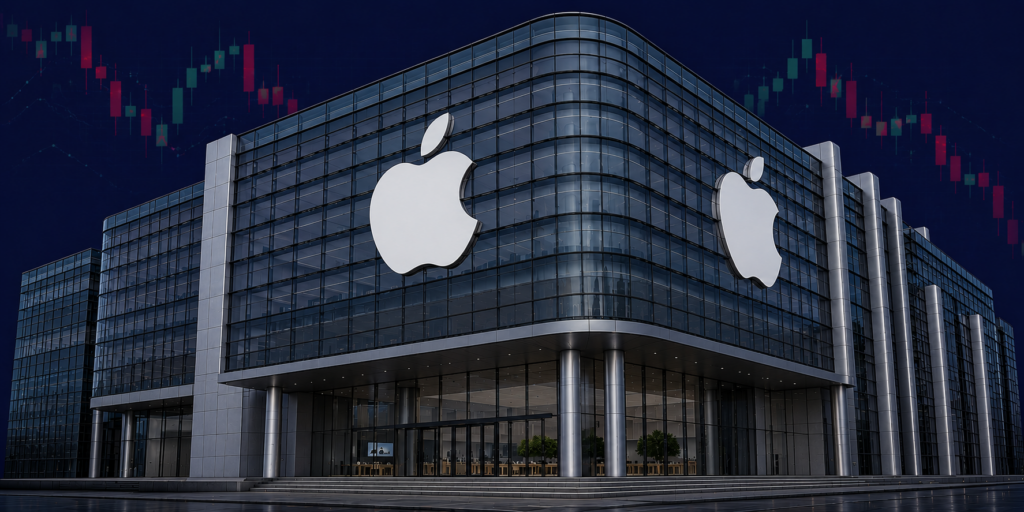
By the time the keynote ended, AAPL shares had declined 2.5% from the morning session’s open, closing lower in a day when the broader Nasdaq was marginally positive. The move added to pressure that had been building on the stock ahead of the event: Apple had underperformed both the S&P 500 and the broader technology sector year-to-date, as investors weighed the Siri delay narrative, the EU regulatory overhang, and the China market competition from Huawei’s AI-enabled devices.
Gene Munster, the Apple analyst at Deepwater Asset Management whose Siri commentary became one of the most-cited takes of the day, was direct on X (formerly Twitter): “AAPL announces the new Siri AI and stock trades down 2.5% on the announcement. My take: The stock drop is entirely buy on the rumor, sell on the news. Everything they showed is what was expected and the features are something only Apple and Google can do with personalized AI.” He then added the line that captured investor sentiment most precisely: “Importantly, stocks seemed to fall because there’s no concrete timeline for Siri AI, with a simple mention of ‘fall 2026’.”
What Apple Actually Announced at WWDC 2026
The full WWDC 2026 product announcement was more comprehensive than the stock reaction suggests. Siri AI — which Apple’s vice president of vision products Mike Rockwell described as “a profoundly more capable assistant that helps you find what you need and gets more done” — is the culmination of the Apple Intelligence architecture first previewed at WWDC 2024 and delayed through WWDC 2025. The new version is deeply contextual: it understands what you are looking at on screen, maintains conversational memory across exchanges, and can execute complex tasks that span multiple applications simultaneously.
In a live demonstration that drew the keynote’s strongest audience response, Rockwell asked Siri for directions to a landmark visible in an Instagram post — without first identifying the landmark or providing any additional context. Siri identified the location from the image, extracted the relevant geographic information, and surfaced navigation directions in a single fluid interaction. This is the kind of cross-app, context-aware behaviour that Apple’s AI team had been promising since the original Apple Intelligence reveal, and it is now shipping — or at least, shipping in fall 2026 in the United States.
Siri AI is powered by Apple’s Apple Foundation Models version 2 — the second iteration of the on-device AI model that processes voice, text, and visual inputs. Apple confirmed the partnership with Google: Siri AI is backed by Google’s Gemini model family for tasks that require cloud-based reasoning, while retaining Apple’s privacy-by-design framework through Private Cloud Compute. This makes Apple one of the only major technology platforms using a competitor’s AI model at the core of its flagship consumer product — a decision that underscores the depth of Apple’s strategic partnership with Google (which already pays Apple an estimated $15–20 billion annually to remain the default search engine on Safari) while also creating a structural question about margin as Google Gemini API costs scale with usage.
The broader operating system releases were substantive. iOS 27 is not a radical visual departure from iOS 26’s Liquid Glass language — Apple is refining rather than rebuilding, adding a Liquid Glass opacity slider that allows users to modulate transparency of interface elements, a response to the user feedback that the iOS 26 design was too visually assertive. The App Store received developer-friendly changes allowing more flexible pricing and distribution. Screen Time and parental controls were expanded substantially, with Apple positioning the improvements explicitly as child-safety leadership in a regulatory environment where Big Tech companies face increasing scrutiny on platform responsibility. Tim Cook’s closing remarks — “I truly believe that the best is still ahead, and Apple is creating the best products in the world to deliver experiences that enrich people’s lives” — were characteristically understated for a keynote that was, in product terms, one of Apple’s more ambitious software years.
The Three Problems the Keynote Did Not Solve
The market’s 2.5% negative reaction on announcement day reflects a specific set of concerns that the WWDC keynote addressed incompletely or not at all.
The first is the timeline vagueness. “Fall 2026” is not a launch date. In Apple’s product vernacular, fall means any time between September and December. For a product feature that was first announced at WWDC 2024 and has now been delayed through two consecutive developer conferences, a vague seasonal window two to four months out reads as continued uncertainty rather than confirmed delivery. Investors who had been waiting for Siri AI as the catalyst for an iPhone upgrade supercycle — the thesis that meaningfully improved on-device AI would drive replacement purchases — need a date, not a season, to begin modelling that upgrade revenue. “Fall 2026” does not provide that precision.
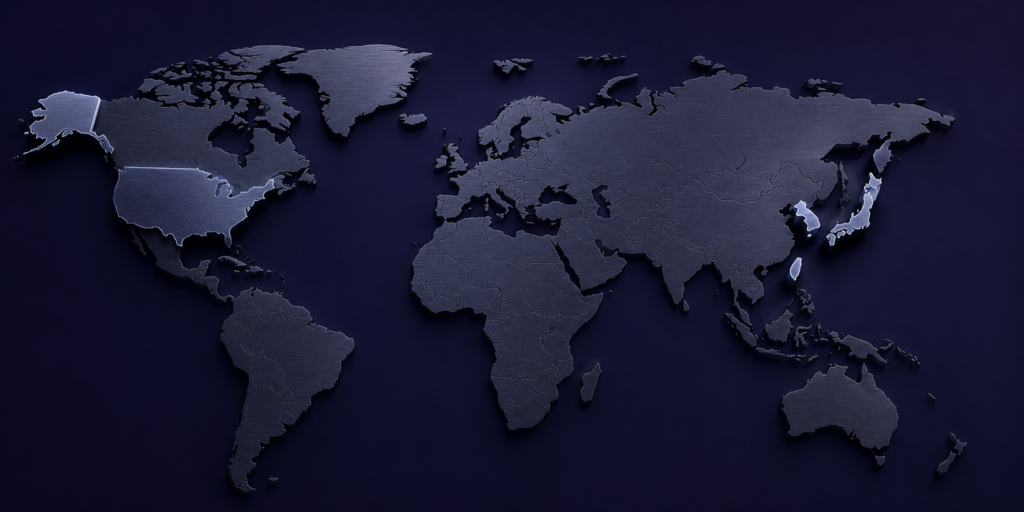
The second problem is the regulatory geography. Apple explicitly stated that Siri AI will not be available in the European Union on iPhone or iPad at launch, with no timeline provided for EU availability — a consequence of ongoing regulatory interactions with the European Commission under the Digital Markets Act. The EU correction posted by Engadget on June 9 was notable: Apple’s initial press release had suggested broader EU availability, but a subsequent update narrowed the initial rollout to macOS Golden Gate 27 and visionOS 27 only, with iOS and iPadOS excluded. This is a material limitation: the EU represents approximately 8% of global iPhone revenue, and the EU’s affluent consumer base skews toward precisely the premium device users who would be most likely to upgrade on the basis of AI capability differentiation.
China presents a separate but equally significant exclusion. Apple has not provided any timeline for Siri AI availability in China — a market that represents approximately 17–18% of Apple’s total revenue and where Huawei’s AI-enabled Mate series has been aggressively competing for the premium smartphone segment that Apple once dominated without serious domestic competition. Without Siri AI in China, the flagship AI differentiator that Apple is leading with in the US market does not translate into the competitive positioning that China revenue recovery requires.
Together, the EU and China exclusions mean that Siri AI at launch will be available primarily in the United States, United Kingdom, Australia, Canada, and a limited set of other English-speaking markets — representing perhaps 40–50% of Apple’s total iPhone installed base, and a smaller proportion of the market where AI features would most directly compete against Android alternatives with locally developed AI capabilities.
The third concern is the competitive context. Apple’s Siri has been the subject of industry jokes about its inadequacy for more than a decade. The features demonstrated at WWDC 2026 are genuinely impressive relative to what Siri could do two years ago. But the comparison that matters is not Siri versus old Siri — it is Siri AI versus what Google Assistant, Samsung Galaxy AI, and ChatGPT integration can do today on Android devices that are already in market. Apple VP Rockwell’s claim that Siri AI is “the biggest update to the assistant ever” is true in historical terms. Whether it is sufficient to lead the AI assistant market against competitors who have not been delayed is the question that remains open. The Gemini partnership is an acknowledgement that Apple needed external model capability to get to this point — and that dependency creates a strategic question about Apple’s long-term AI model differentiation relative to Google, which is simultaneously a partner and the dominant Android competitor.
The Market Structure Around the Decline
The 2.5% decline on June 8 continued a pattern that has been visible across multiple major Apple product events in the past several years. The “buy the rumour, sell the news” dynamic Munster described is amplified in Apple’s case by the stock’s weight in major indices — AAPL’s market capitalisation above $3 trillion means that a 2.5% move generates more than $75 billion in market cap loss, which in turn creates a mechanical drag on S&P 500 and Nasdaq index returns that prompts institutional portfolio rebalancing.
AAPL’s year-to-date performance heading into WWDC had been modestly negative — down approximately 2–4% against a Nasdaq that had been volatile but positive over the same period. The Siri delay thesis had been the dominant bear case narrative for the stock since WWDC 2025, when the new Siri failed to appear for a second consecutive year. WWDC 2026 resolved that narrative partially — the feature is now real, demoed, and shipped to developers — but introduced a new uncertainty in the form of a vague launch timeline and material geographic exclusions that limit near-term revenue impact.
The analyst community’s aggregate response was measured rather than decisive. The features showcased are real and represent genuine progress. The partnership structure with Google is commercially logical even if strategically complex. The EU and China regulatory constraints are external to Apple’s product decisions and will likely resolve over time as regulatory frameworks adjust and local AI partnerships are established. The upgrade supercycle thesis — which requires consumers to replace existing iPhones at accelerated rates specifically because of AI features — is not invalidated by WWDC 2026, but it requires a confirmed US launch date, strong developer adoption during the beta period, and consumer response data to actually move EPS estimates.
For investors in AAPL from India’s perspective, the stock’s movement also carries currency and index implications. Apple is among the most significant holdings in US-listed ETFs accessible through Indian LRS-enabled investment platforms, and its weight in the S&P 500 information technology sector means that any sustained AAPL underperformance creates index-level effects for Indian investors holding US index funds or technology sector ETFs.
The Broader WWDC Context: What the Developer Week Adds
WWDC 2026 runs until June 12, meaning technical sessions, API announcements, and developer tool releases will continue through the week. For investors, the sessions most worth monitoring are those related to the Apple Intelligence developer framework — specifically, how third-party applications can integrate Siri AI capabilities, because the degree to which developers can build on top of the new contextual intelligence layer determines how quickly the Siri AI feature set compounds beyond Apple’s own first-party demonstrations.
Apple’s App Store policy changes — allowing more flexible pricing structures and developer control over in-app purchase flows — are a response to ongoing regulatory pressure from the European Commission and class action settlements in the US. The financial implications for Apple’s services revenue (which crossed $108 billion in FY25 and represents its highest-margin segment) depend on whether the concessions granted are sufficient to avoid further regulatory action or whether additional App Store liberalisation is mandated by the courts or regulatory agencies.
The bigger picture for Apple investors in 2026 is unchanged by WWDC: the company is three to four years into the AI transition with its on-device processing architecture providing a privacy and performance differentiation that competitors on cloud-only AI models cannot fully replicate. The delay in realising that advantage through Siri AI has been the source of genuine competitive risk. WWDC 2026 suggests that the product is finally real. The question now is when “fall 2026” becomes a date — and how much of the AI upgrade cycle potential the geographic exclusions leave on the table.
Disclaimer: Investments in securities markets are subject to market risks. Read all the related documents carefully before investing. The securities quoted are exemplary and are not recommendatory.