Global oil markets have staged a sharp reversal after the preliminary peace agreement between Iran and the United States reduced concerns over disruptions in one of the world’s most important energy corridors. Crude prices, which surged earlier this year amid fears of prolonged conflict in the Middle East, have fallen to their lowest levels in three months as traders unwind the geopolitical risk premium that had been built into oil markets.
The agreement marks a significant turning point for energy markets because it addresses concerns surrounding the Strait of Hormuz, a narrow waterway connecting the Persian Gulf to global markets. The strait remains one of the world’s most critical energy chokepoints, carrying roughly a quarter of global seaborne oil trade and significant volumes of liquefied natural gas. Any disruption to traffic through the route can have immediate consequences for global energy prices.
Why the Strait of Hormuz Matters
The Strait of Hormuz handles around 20 million barrels of crude oil and petroleum products every day. Before the recent agreement, concerns that military escalation could restrict shipping through the corridor pushed oil prices sharply higher and raised fears of a broader supply shock. According to international energy agencies, approximately 20% to 25% of global seaborne oil trade passes through the strait, making it the single most important oil transit route in the world.
The importance of the route extends far beyond the Middle East. Asian economies are particularly exposed because the majority of oil flowing through Hormuz is destined for markets such as China, India, Japan, and South Korea. Research shows that more than 80% of the oil transported through the strait ultimately reaches Asian buyers.
As tensions escalated earlier this year, energy traders began pricing in the possibility of prolonged disruptions. Brent crude briefly surged above $100 per barrel during the peak of the crisis, creating concerns about inflation, transportation costs, and economic growth across major economies.
Peace Deal Triggers Oil Selloff
That narrative has changed quickly.
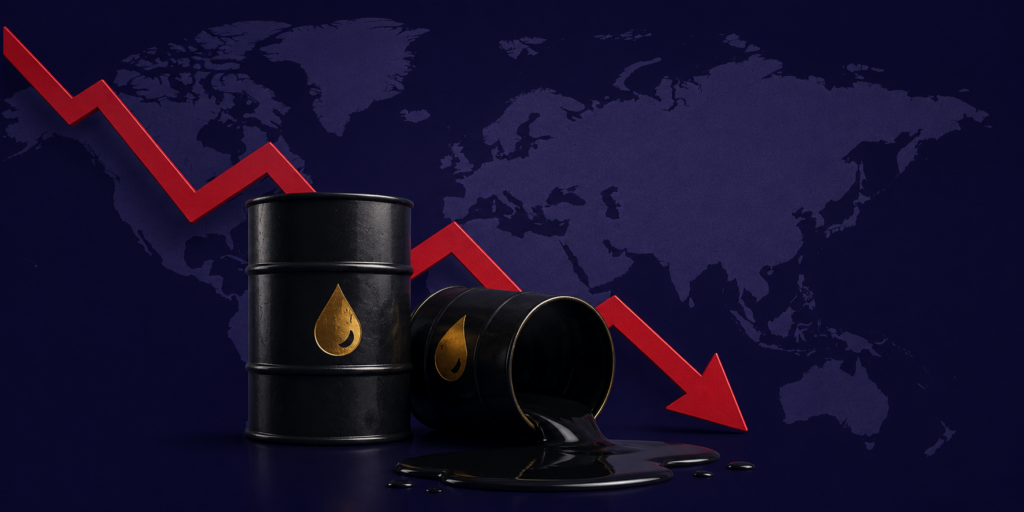
The preliminary Iran–U.S. agreement includes steps aimed at restoring commercial shipping activity and improving energy market stability. As confidence returned to markets, traders began removing the supply-risk premium that had accumulated during the conflict. Oil prices subsequently fell to their lowest level in roughly three months.
Market data on June 17 shows crude oil trading near $76 per barrel, significantly below the levels seen during the height of the crisis. Oil has fallen more than 25% over the past month as expectations for uninterrupted supply flows improved.
The decline reflects a broader shift in market psychology. Energy markets are increasingly focused on the return of supply rather than the threat of shortages. With shipping activity expected to normalize gradually, traders are reassessing assumptions that previously supported higher prices.
What Lower Oil Means for the Global Economy
Falling oil prices could provide relief to governments, businesses, and consumers around the world.
Energy costs influence everything from transportation and manufacturing to food production and household utility bills. Lower crude prices generally help reduce inflationary pressure by lowering input costs across industries. This can improve consumer spending power and ease pressure on central banks that have spent the past several years battling inflation.
Financial markets have already reacted positively. U.S. equities advanced as lower energy prices improved the outlook for economic growth and corporate profitability. Investors interpreted the decline in oil as a sign that inflation risks may be moderating, potentially giving policymakers greater flexibility in future monetary decisions.
For major oil-importing nations, the development is especially important. Countries that rely heavily on imported crude benefit directly when energy prices fall because lower import costs improve trade balances and reduce pressure on domestic fuel prices.
Why Markets Remain Cautious
Despite the sharp decline in prices, analysts are not expecting an immediate return to pre-crisis oil levels.
The agreement remains preliminary, and implementation risks remain. Energy analysts note that while the reopening of shipping routes is a positive development, markets will continue monitoring compliance, regional stability, and actual supply flows before fully removing the remaining geopolitical premium.
The Strait of Hormuz remains strategically important, and even minor disruptions can influence global energy prices. Alternative export routes exist, but their capacity is limited compared to the volumes that normally pass through the strait. As a result, the region will continue to play an outsized role in determining global oil market sentiment.
The Bottom Line
The Iran–U.S. peace agreement has delivered an immediate response from global energy markets. Oil prices have fallen sharply as fears of a prolonged supply disruption fade and expectations for normal shipping activity return. The development highlights how sensitive energy markets remain to geopolitical events, particularly those involving the Strait of Hormuz.
While uncertainty has not disappeared entirely, the agreement has shifted the market conversation from supply shortages to supply normalization. For investors, policymakers, and consumers, that shift could have significant implications for inflation, economic growth, and financial markets in the months ahead.
Major geopolitical events often create short-term volatility across commodities, equities, and currencies. For long-term investors, understanding the connection between global events and financial markets is critical. Energy prices influence inflation, interest rates, corporate earnings, and consumer spending, making oil one of the most closely watched indicators in the global economy. Diversified portfolios with exposure across sectors and regions can help investors navigate periods of uncertainty while staying focused on long-term wealth creation.
Disclaimer: Investments in securities markets are subject to market risks. Read all related documents carefully before investing. The securities and examples mentioned above are only for illustration and are not recommendations.