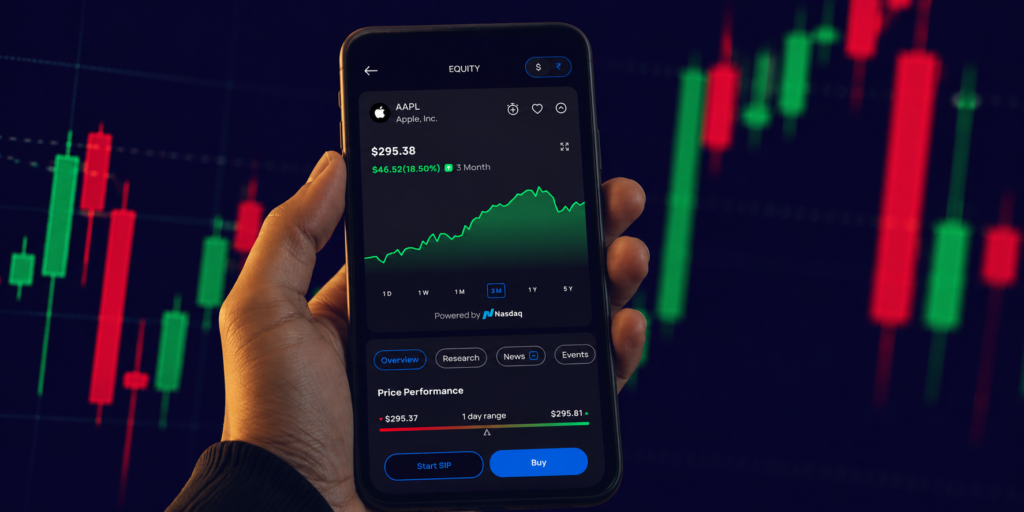
Speculation in trading means buying or selling an asset based on the expectation that its price will move in a certain direction. If you want the broader foundation first, start with what is trading before moving into speculation-focused strategies.
Unlike traditional investing, which focuses on long-term business growth and steady returns, speculation is centred on timing and market movement. Speculators rely on trends, news, technical signals and sentiment to make decisions, which is why many traders study the best indicator for intraday trading.
In this article, we discuss how speculation works and how it differs from investing.
What Does Speculation Mean in the Stock Market?
Stock market speculation refers to buying or selling shares mainly to profit from expected price movements rather than long-term business growth.
A speculator is less concerned about dividends or long-term fundamentals. The focus is on price direction; whether a stock is likely to move up or down within a short period.
Defining Speculation in Financial Markets
If we define speculation in financial markets, it means taking calculated risks based on anticipated price changes. In the stock market, this can involve:
- Buying shares before expected news
- Short-selling when prices seem overvalued
- Trading based on technical signals
- Acting on earnings announcements
Speculation vs Investment: Key Differences
Although both involve buying and selling assets, their approach is different.
| Basis | Speculation | Investment |
| Goal | Short-term price gains | Long-term wealth growth |
| Holding Period | Short-term | Long-term |
| Risk Level | High | Moderate |
| Decision Factors | Trends, news, volatility | Business performance, earnings |
Historical Context of Speculative Trading
Speculative trading has existed for centuries. Early commodity markets saw traders betting on price changes in crops and goods.
Over time, speculation expanded into stock exchanges, derivatives and currency markets. Major market events, such as bull runs and crashes, involve heavy speculative activity.
How Does Speculative Trading Work?
Speculative trading works by identifying short-term price opportunities and entering trades before expected movement happens.
Traders analyse patterns, news, earnings reports, economic data and market momentum to make decisions. The aim is simple: enter at one price, exit at a better one.
1. Mechanics of Speculative Transactions
A speculative transaction usually follows this structure:
- Identify a potential price movement
- Enter the trade (buy or sell)
- Set a target price
- Set a stop-loss to limit losses
- Exit when the target or the stop is hit
2. Time Horizons in Speculation
Speculation can happen across different time frames:
- Intraday trading: Positions closed within the same day
- Swing trading: Positions held for a few days or weeks
- Short-term position trading: Held for a few months
3. Leveraged Positions and Margin Trading
Many speculative traders use leverage, so understanding option trading indicators becomes important when derivatives are involved. This means borrowing funds to increase position size. For example:
- Margin trading lets traders to control larger positions with limited capital.
- Futures and options provide exposure without having to pay the full asset value upfront.
Leverage can increase gains but it can also increase losses quickly. Even a small rate change can have a major impact when borrowed funds are involved.
4. Risk-Reward Profile of Speculation
Speculation follows a high-risk, high-reward structure. Traders enter positions expecting sharp price movements, which can generate quick profits.
But the same volatility can lead to fast losses, especially when leverage is involved. The outcome depends heavily on timing, discipline, and strict risk control.
What Are the Types of Speculators?
Speculators differ based on their market outlook, time frame and strategy. Some common types are:
1. Bulls
Bulls think prices will rise. They buy stocks or other assets hoping to sell them later at a higher price. You’ll usually see more bulls when markets are moving up and confidence is strong.
2. Bears
Bears believe prices will fall. They may sell their holdings early or even short-sell to profit from a decline. Bearish speculation becomes even more common during market corrections or weak economic phases.
3. Stags
Stags look for quick profits, especially in IPOs. They apply for new shares and sell soon after listing if the price jumps. They are not interested in holding for the long term.
4. Lame Ducks
Lame ducks are traders who take heavy losses. This usually happens when a speculative trade moves sharply against them, particularly if leverage is involved. It’s a reminder that speculation has real risk.
Day Traders vs Position Traders
Both fall under types of speculators but differ in time horizon.
| Category | Holding Period | Focus |
| Day Traders | Within the same trading day | Small price movements, high volume |
| Position Traders | Weeks to months | Broader trends and market direction |
What is Speculation in the Foreign Exchange Market?
Speculation in the foreign exchange market refers to trading currencies with the expectation that exchange rates will move in a certain direction.
Unlike long-term currency holding for trade or business needs, forex speculation is purely profit-driven. The forex market is highly liquid and functions 24 hours daily, making it attractive for speculative traders.
How Currency Speculation Works
Currency speculation means trading one currency against another to profit from exchange rate changes. In forex, currencies are always traded in pairs:
- If a trader thinks the US dollar will rise against the euro, they buy USD and sell EUR.
- If the exchange rate moves in their favour, they earn the difference.
- If it moves the other way, they incur a loss.
Forex Market Speculation Strategies
Forex traders use different short-term strategies to capture price movements. Some common ones are:
- Trend trading: Buying or selling based on ongoing currency momentum.
- News trading: Taking positions around economic data like inflation, GDP, or employment reports.
- Scalping: Making multiple small trades to capture minor price changes.
- Breakout trading: Entering when a currency pair moves above the key support or resistance level.
Carry Trade and Interest Rate Speculation
Carry trade is a popular forex strategy. It means borrowing in a low-interest-rate currency and investing in a higher-interest-rate currency.
The trader profits from the interest rate difference, along with possible exchange rate gains. Interest rate announcements by central banks usually drive speculation in currency markets. Even small rate changes can cause significant price movement.
Impact on Currency Values
Speculation influences currency prices by raisin demand or supply. When many traders expect a currency to strengthen, buying pressure increases and the exchange rate rises.
When traders expect weakness, selling pressure increases and the currency depreciates.
Conclusion
Speculation means taking positions based on expected price movement. It plays a significant role in stock and currency markets by adding liquidity and supporting price discovery. However, speculative trading carries high risk. Success depends on timing, discipline, strict risk management and and strong trading psychology.
For investors seeking exposure to global markets, US stocks and US ETFs offer broader opportunities. At the same time, structured investing through tools like Daily SIP can provide stability.
FAQs on Speculation in Trading
Speculation means buying or selling an asset to make a profit from short-term price changes.
Instead of focusing on long-term growth or income, a speculator tries to predict where prices will move next. If the prediction is right, they profit. If it is wrong, they can face losses.
The difference lies in purpose, time frame and risk.
Speculation aims to profit from short-term price movements. It involves a higher risk and relies heavily on market timing.
Investment focuses on long-term wealth creation. It is based on fundamentals like earnings, growth and stability.
The main types of speculators are:
Bulls: Expect prices to rise and buy assets.
Bears: Expect prices to fall and sell or short-sell.
Stags: Apply for shares in new issues and sell quickly for listing gains.
Lame Ducks: Traders who fail to meet payment obligations due to losses.
Day Traders: Open and close positions within the same day.
Position Traders: Hold speculative positions for weeks or months.
Speculation in the foreign exchange market refers to trading currencies with the expectation that exchange rates will change in a trader’s favour.
For example, if a trader believes the US dollar will strengthen against the euro, they may buy USD and sell EUR. If the rate moves as expected, they profit from the difference.
Yes, speculation is legal in regulated stock markets. Purchasing and selling shares, derivatives, or currencies based on price expectations is allowed as long as traders follow market rules.
Beginners should start small and treat speculation as high risk from the beginning. Use limited capital, avoid heavy leverage and make sure to set a stop-loss before entering a trade. Focus on one strategy instead of jumping between ideas and never trade money meant for essential expenses.
Disclaimer: Investments in securities markets are subject to market risks. Read all the related documents carefully before investing. The securities quoted are exemplary and are not recommendatory.