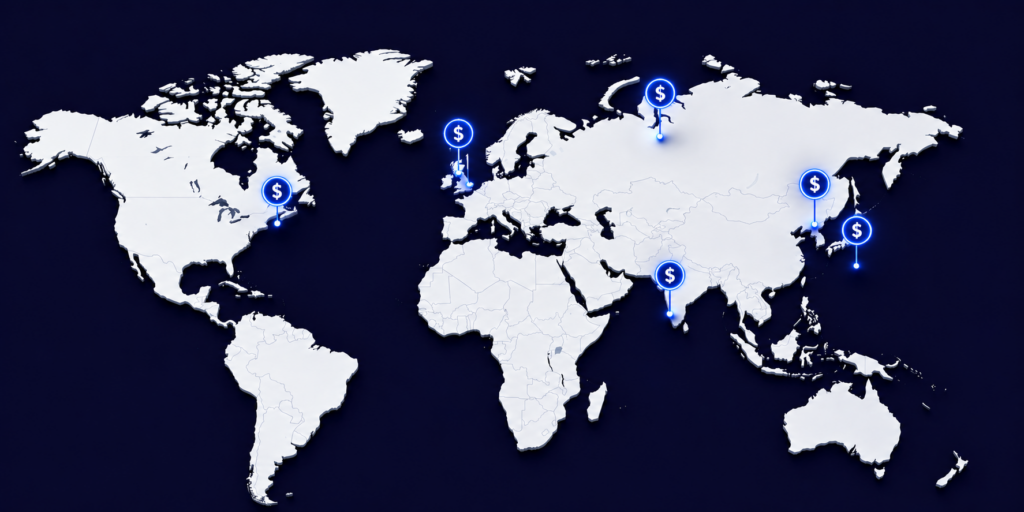
In 2026, global capital flows are no longer driven purely by retail momentum or institutional rotation—they are increasingly anchored by sovereign wealth funds (SWFs). These state-owned investment giants, managing over $15 trillion in assets, are quietly reshaping the structure of global equity markets.
At the center of this shift lies the US stock market.
For investors today, especially those exploring global diversification through platforms like Appreciate, understanding where sovereign capital is moving is no longer optional—it is foundational. These funds represent the most patient and powerful pools of capital in the world, and their allocation decisions often define long-term market direction.
The emerging concept of the “Sovereign Anchor” reflects a simple but powerful idea: when trillion-dollar funds consistently allocate to a market, they create a structural base that stabilizes and supports valuations over time.
Why the US Stock Market Is the Only Viable Home for “Whale” Capital
Sovereign wealth funds operate at a scale that fundamentally changes how they invest. Unlike retail or even large institutional investors, their primary constraint is not return maximization—it is liquidity.
The world’s largest sovereign funds—including Norway’s Government Pension Fund Global (GPFG), China’s SAFE, and Abu Dhabi’s ADIA—collectively control nearly $6.84 trillion. This is larger than the entire Indian equity market, which stands at approximately $5.2 trillion.
This scale creates a unique problem.
For a fund managing hundreds of billions—or even trillions—deploying or withdrawing capital is not a simple decision. A $50 billion transaction in most global markets would trigger severe volatility. In contrast, the US market absorbs such flows as routine activity.
This is why the US is not just a preferred destination—it is the only practical one.
Liquidity, depth, and resilience make the US market uniquely capable of supporting sovereign-scale transactions without disruption. For these funds, diversification becomes secondary. The primary objective is ensuring that capital can move freely, even during periods of stress.
Mapping Sovereign Capital: Who Is Investing and Where
A closer look at sovereign allocations reveals just how deeply embedded the US market has become in global capital strategies.
Top sovereign funds and their exposure to U.S. equities:
| Rank | Country | Fund | AUM | US Allocation |
| 1 | Norway | GPFG | $2.12T | 40% |
| 2 | China | SAFE | $1.95T | 30–35% |
| 3 | China | CIC | $1.57T | 60% |
| 4 | UAE | ADIA | $1.20T | 45–60% |
| 5 | Kuwait | KIA | $1.03T | >50% |
| 6 | Singapore | GIC | $940B | 49% |
| 7 | Saudi Arabia | PIF | $925B | 2.1% |
| 8 | Indonesia | Danantara | $1.00T | Mostly Domestic |
| 9 | Qatar | QIA | $557B | 20% |
| 10 | Hong Kong | HKMA | $533B | 82% |
What stands out is not just the size of these funds, but the consistency of their US exposure. Many allocate between 40% and 60% of their portfolios to US assets, with some going even higher.
This is not tactical positioning—it is structural commitment.
In effect, sovereign wealth funds are treating the US market as a permanent allocation, rather than a cyclical opportunity.
Beyond Big Tech: The Shift Toward Hard Assets
While retail narratives continue to revolve around AI stocks and the “Magnificent Seven,” sovereign capital is taking a different approach.
SWFs are increasingly allocating capital toward what can be described as the “AI backbone”—the physical infrastructure that powers the digital economy.
This includes:
- Data centers
- Energy grids
- Digital infrastructure platforms
- Cooling and power systems
The US now accounts for nearly 50% of global data center capacity, with supply expected to grow at an annual rate of 17%. Sovereign funds are not merely investing in software companies; they are funding the underlying infrastructure that enables AI and cloud computing to scale.
Large-ticket investments—often exceeding $10 billion—are being directed into platforms that own land, power access, and next-generation infrastructure.
This shift reflects a deeper strategic mindset.
Rather than chasing high-valuation tech stocks, sovereign investors are positioning themselves in capital-intensive, long-duration assets that offer stable cash flows and structural relevance.
The Math Behind the “De-Dollarization” Debate
The narrative of global de-dollarization has gained traction in recent years. However, when examined through the lens of sovereign capital flows, the argument becomes less compelling.
For a trillion-dollar fund, reallocating even 1% of assets into a smaller market can overwhelm that market’s liquidity. This creates a practical limitation on diversification away from the US.
At the same time, US benchmark rates—hovering around 3.5% in early 2026—offer relatively attractive real yields compared to other developed markets.
The result is a simple but powerful equation:
- High liquidity
- Competitive yields
- Deep capital markets
Together, these factors make the US not just attractive, but mathematically unavoidable for large-scale capital allocation.
The Yield Mandate: Why Sovereign Buying Is Structural
Sovereign wealth funds are not just investors—they are economic instruments.
Many of these funds operate under a “spending mandate,” meaning they must generate consistent returns to support national budgets. This creates a continuous need for income-generating assets.
In this context, US equities and Treasuries play a critical role.
The combination of dividend yields, capital appreciation, and market stability makes US assets uniquely suited to meeting these mandates. As a result, sovereign buying is not cyclical—it is structural and ongoing.
For these funds, the cost of inaction is significant. Remaining underinvested in US markets means missing out on both income and long-term capital growth.
The Multiplier Effect: How Sovereign Capital Shapes Markets
When sovereign wealth funds enter a sector, their impact extends far beyond their initial investment. This is known as the “Multiplier Effect.”
The average sovereign deal size has risen to approximately $490 million per transaction. These large inflows create ripple effects across markets, influencing valuations, liquidity, and investor sentiment.
Sectors such as defense, healthcare, and infrastructure often benefit from this dynamic. Once sovereign capital establishes a presence, it tends to attract additional institutional and retail investment, reinforcing upward momentum.
Importantly, this creates a form of downside protection.
The consistent presence of long-term capital provides a valuation floor, reducing the likelihood of sharp corrections in these sectors.
For individual investors, this offers a key insight: while it is impossible to replicate sovereign-scale investing, it is possible to align with their direction.
Bridging the Gap: Accessing Sovereign-Driven Opportunities
The challenge for most investors is not understanding these trends—it is accessing them.
Historically, investing in US markets required navigating complex processes, high costs, and operational barriers. This created a gap between institutional and retail participation.
Platforms like Appreciate are helping bridge this gap.
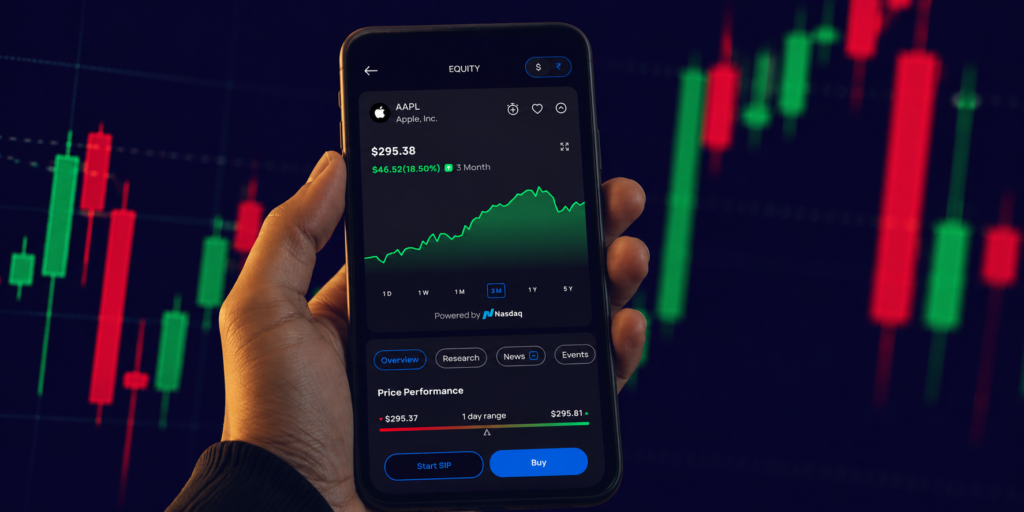
By enabling fractional ownership and seamless access to US-listed assets, investors can participate in the same markets where sovereign capital is being deployed. This includes exposure to infrastructure-driven sectors and companies that form the backbone of the global economy.
More importantly, such platforms simplify the process of global investing, allowing individuals to move beyond domestic constraints and align their portfolios with global capital flows.
The global investment landscape is undergoing a structural shift.
Conclusion: Following the World’s Most Patient Capital
Sovereign wealth funds, with their trillion-dollar balance sheets and long-term horizons, are increasingly anchoring the US stock market. Their decisions are driven not by short-term narratives, but by fundamental constraints—liquidity, yield, and scale.
The implications are significant.
When the world’s most sophisticated and patient capital consistently allocates to a market, it creates a powerful foundation for long-term growth. It also signals where future opportunities are likely to emerge.
For investors, the takeaway is clear.
Understanding sovereign capital flows is no longer a niche exercise—it is a critical component of modern portfolio strategy. And while individual investors cannot operate at the scale of these funds, they can observe, adapt, and align.
Because in a market shaped by trillion-dollar decisions, direction matters more than size.
Disclaimer: Investments in securities markets are subject to market risks. Read all the related documents carefully before investing. The securities quoted are exemplary and are not recommended.