The bottleneck choking the AI boom and the energy transition isn’t chips or cables — it’s a steel-and-copper box that hasn’t changed much since Edison’s era.
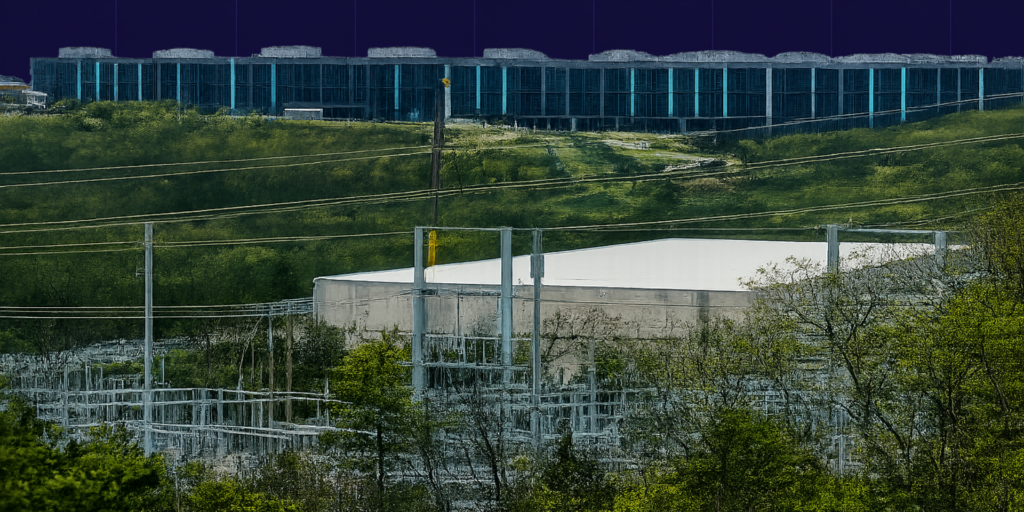
The AI revolution runs on electricity. But before a single prompt reaches a GPU cluster in Virginia or Texas, that electricity must pass through a transformer — a heavy, oil-filled device that steps voltage up or down along the power grid. And right now, America cannot get enough of them.
Lead times for large power transformers have stretched to an average of 128 weeks, according to Wood Mackenzie’s most recent survey data. Independent analysts at PwC put the number even higher, estimating wait times for high-capacity units at up to four years. In an economy that measures compute in milliseconds, the foundational hardware of the electrical grid now takes longer to procure than it does to build a semiconductor fab.
For investors with global equity exposure — and for Indian portfolios increasingly tilted toward U.S. industrials and infrastructure plays — this supply crisis is creating one of the clearest structural investment opportunities in the market today.
How the Shortage Became a Crisis
The transformer deficit did not arrive overnight. It is the product of three converging forces that each individually would have been manageable, but together have proven overwhelming.
Demand has exploded. Since 2019, demand for generator step-up transformers — the units that connect power plants to the grid — has grown 274%, according to Wood Mackenzie. Substation power transformer demand is up 116% over the same period. AI data centres, EV charging infrastructure, and semiconductor manufacturing facilities have all arrived simultaneously, each drawing vastly more power per square foot than the factories and offices they replaced.
Supply is structurally constrained. Approximately 80% of the large power transformers used in the United States are imported. The domestic manufacturing base currently meets only about 20% of the country’s needs. Cleveland-Cliffs is the sole domestic producer of Grain-Oriented Electrical Steel (GOES), the specialized magnetic material that forms the core of every transformer. This single-supplier reality means that trade restrictions — which have intensified since 2019 — directly squeeze the manufacturing capacity of American producers who depend on domestic steel alone.
Prices have followed. Power transformer prices have risen 77% since 2019. Distribution transformer prices have climbed between 78% and 95% over the same period. For utilities and data centre developers, equipment availability has replaced capital and permitting as the primary constraint on project timelines.
The Demand Story Is Getting Bigger, Not Smaller
What makes this investment thesis durable rather than cyclical is that the forces driving demand are long-cycle and policy-backed.
In March 2026, the U.S. Department of Energy launched the $1.9 billion SPARK programme — Speed to Power through Accelerated Reconductoring and Other Key Advanced Transmission Technology Upgrades — specifically designed to accelerate domestic energy supply and remove obstacles to rapid load growth. The explicit target: handling the energy appetite of modern AI facilities, which the DOE describes as “large new loads.”
Meanwhile, the distribution transformer market — the smaller units that power neighbourhoods, EV fast-charging hubs, and edge computing facilities — is seeing the sharpest growth. The global distribution transformer market is estimated at $22.71 billion in 2026, forecast to reach $35.05 billion by 2033. Instead of one massive, custom-built transmission transformer taking years to arrive, data centre operators and utilities are increasingly deploying modular, lower-capacity units at scale. This shift toward distributed infrastructure is driving a surge in smaller, faster-to-install units that manufacturers with existing North American footprints are best positioned to supply.
New manufacturing capacity has been announced — nearly $1.8 billion in North American expansions — but construction lags and permitting timelines mean full operational capacity is not expected to come online until late 2027 or 2028. Wood Mackenzie estimates the current shortfall at roughly 30% for power transformers and 10% for distribution units. The gap is not closing fast enough. For projects executing before 2028, the current constrained market is the only market that exists.
The Companies That Hold the Moat
In a market defined by physical scarcity, the competitive advantage belongs to companies with established North American manufacturing footprints, deep order backlogs, and the balance sheets to absorb ramp-up costs. Three names stand out on all three counts.
GE Vernova (NYSE: GEV) is arguably the most direct beneficiary of the electrification bottleneck. The company’s Electrification segment — which includes grid equipment, transformers, and power electronics — reported $3.0 billion in revenue in Q1 2026, up 61% year-on-year. Its Electrification backlog has grown from $9 billion at the end of 2022 to $42 billion today. In Q1 2026 alone, the segment booked $2.4 billion in equipment orders from data centre customers — more than the entire year of 2025. Total company backlog now stands at $163 billion, and management has pulled forward its $200 billion backlog target from 2028 to 2027. Full-year Electrification revenue is guided at $14.0–$14.5 billion with 18–20% EBITDA margins. GEV is one of the only companies globally that supplies grid transformers, medium-voltage switchgear, and gas turbines at scale — the full power stack that hyperscalers and utilities are scrambling to secure simultaneously.
Eaton Corporation (NYSE: ETN) reported record Q1 2026 revenue of $7.5 billion, up 17% year-on-year, with data centre orders up 240% in its Electrical Americas segment. Eaton’s rolling 12-month book-to-bill stands at 1.2, meaning orders continue to outpace shipments — a classic signal of durable pricing power. The company has deployed over $1 billion in capital expenditure across 24 facilities in the Americas to expand capacity, with 12 already ramped and six more coming online by year-end. Full-year 2026 organic growth guidance has been raised to 9–11%. The backlog provides strong forward visibility through at least 2027.
Schneider Electric (EPA: SU) rounds out the picture on the global side. The French industrial giant reported €11.4 billion in Q1 2026 revenue, driven by a 13% increase in energy management — the division that serves data centres, utilities, and industrial electrification. Schneider’s dual exposure to both North American and European grid modernisation, combined with its software and energy management platform, gives it a more diversified revenue base than pure-play transformer manufacturers.
What Indian Investors Should Know
For Indian retail and institutional investors with global market access — through Liberalised Remittance Scheme (LRS) investments, international mutual funds, or direct equity via platforms offering U.S. market access — this sector warrants close attention.
The transformer shortage is not a short-term procurement disruption. It is a structural, multi-year infrastructure deficit that is being reinforced by policy (the SPARK programme, domestic manufacturing mandates), by demand (AI data centres are not a fad), and by the sheer physical difficulty of building new manufacturing capacity quickly. The companies best positioned — GEV, ETN — are reporting record backlogs, raising full-year guidance, and demonstrating pricing power even as they absorb capacity ramp-up costs.
Indian investors familiar with infrastructure cycles at home will recognise the pattern: when demand structurally outpaces supply of a critical physical component, and new capacity takes years to build, the incumbents with existing scale earn outsized returns for an extended period. That is precisely the situation playing out in North American power infrastructure today.
The caveat worth noting is execution risk. Eaton’s Q1 2026 segment margins came in 120 basis points below the prior year, reflecting the cost of rapidly expanding capacity. GEV’s Wind segment continues to generate EBITDA losses. These are not distress signals, but they are reminders that even well-positioned industrial companies face near-term margin pressure during aggressive expansion phases.
The bigger risk, paradoxically, is not that the thesis fails — it is that it succeeds so visibly that valuations move before patient investors can build positions. GEV stock closed up 13.6% on its Q1 earnings print. The market is beginning to notice.
The energy transition is a hardware story as much as it is a policy story. And right now, the hardware is backordered.
Disclaimer: Investments in securities markets are subject to market risks. Read all related documents carefully before investing. The securities and examples mentioned above are only for illustration and are not recommendations.