Leverage trading is a method used by many participants in the financial markets to increase their buying power. It allows a person to trade a much larger value of assets than the actual cash they have in their account. While this concept can help in managing larger positions with minimal capital, it also brings a higher level of risk.
For an investor in India, understanding leverage trading is vital because it changes the way profits and losses are calculated. Many people see it as a way to grow a small amount of money quickly but it requires a disciplined approach. This strategy is common in various segments of the National Stock Exchange (NSE) and the Bombay Stock Exchange (BSE), particularly in the derivatives segment.
Key Takeaways
- Margin trading enables traders to make extensive trades on the markets with a minimal amount of their own cash as collateral.
- This may lead to high returns but also high risks, which is why risk management is important.
- Margin is the actual cash required to open a leveraged position, acting as a security deposit for the broker.
- High leverage ratios increase the chance of a margin call, where a broker asks for more funds to keep a trade open.
How Leverage Trading Works
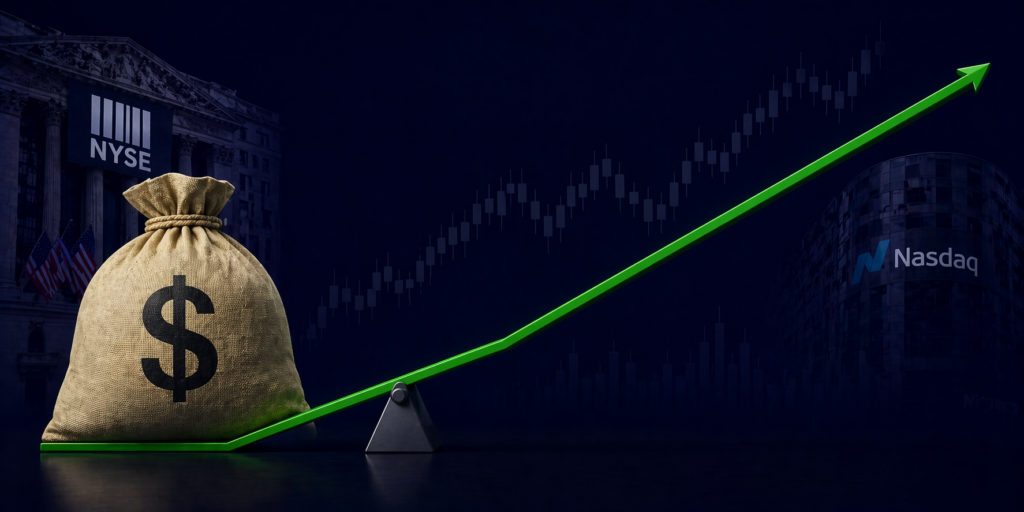
In the world of finance, what a leverage is can be explained as using borrowed funds to increase the size of a trade. Think of it like a home loan where you pay a small down payment to own a much more expensive house. In trading, the broker provides the extra capital, allowing you to hold a position that would otherwise be out of reach.
Leverage ratio in a large position consists of numbers like 1:5 or 1:10. With a fund of ₹10,000 and 1:5 leverage ratio, one can trade ₹50,000 shares. The role of a broker here is to “amplify” the capital. This is why the leverage meaning in trading is often associated with the concept of “gearing.”
Margin is an essential factor in this equation. Margin refers to the amount of money that must be in the trader’s account before initiating a leveraged trade. Margin does not entail a fee or charge but it refers to a certain portion of the trader’s funds placed as collateral while the trade is ongoing.
Where Leverage Trading Is Used
Leverage is available across various financial markets in India, though the rules set by the Securities and Exchange Board of India (SEBI) govern how much can be used. Different assets have different volatility levels which determine the amount of leverage a broker might offer.
- Stocks: In India’s cash market, SEBI caps intraday leverage at 5x (i.e., a maximum leverage ratio of 1:5), requiring traders to maintain at least 20% of the position value as margin.
- Forex: The currency market is known for very high leverage because currency prices usually move in very small fractions.
- Commodities: Trading in gold, silver or crude oil on the Multi-Commodity Exchange (MCX) typically involves high leverage through futures contracts. MCX operates under SEBI regulation, which sets margin requirements for commodity futures as well.
- Cryptocurrencies: There is no specific crypto-related law currently in place in India, but cryptocurrencies fall under the purview of Virtual Digital Assets (VDAs), which fall under the ambit of Income Tax laws and are taxable. International crypto exchanges may provide leveraged trading of up to 1:50 ratio.
Benefits of Leverage Trading
The most obvious benefit is the ability to amplify potential profits. Since you are trading a larger volume, even a small price movement in your favor can result in a significant percentage gain on your initial deposit. This makes it possible to earn meaningful returns even with a modest starting balance.
The other benefit associated with leveraging is effective utilization of capital. As opposed to tying down one’s capital by purchasing a certain stock using ₹1,00,000, leverage helps an individual invest ₹20,000 to purchase a stock while leaving ₹80,000 free for other investment purposes. In this case, an investor’s capital will be kept “liquid.”
This feature also helps investors adopt different strategies when trading. For example, investors can adopt the short selling strategy using leverage. Through this strategy, an investor bets on a declining stock price.
Risks Involved in Leverage Trading
The most dangerous thing in this case will be the fact that losses will increase. Leverage works not only when profits are gained; it also increases losses. Even a tiny fall of the asset’s price by 2% will lead to a loss of 20% for you.
A margin call is a significant risk factor. If the value of your trade drops too low, your account balance might fall below the “maintenance margin” required by the broker. When this happens, the broker will ask you to deposit more money immediately. If you cannot provide the funds, the broker will close (square off) your position.
In order to prevent this, traders place what are known as stop-loss orders. These are instructions to the broker that when the trade drops to a particular level, it must automatically be closed out. This way, one poor trade cannot wipe out the whole trading portfolio.
How to Start with Leverage Trading
Firstly, selecting the appropriate platform would be the initial step. In India, one must search for a SEBI-regulated broker providing a reliable trading application along with a clear margin system. Brokers offer varying degrees of technological and research assistance.
Opening a trading account is always an online process that requires KYC (Know Your Customer) documents such as your PAN and Aadhaar cards. After opening the trading account, you must be familiar with the exact margin needed for the instruments you will trade. Some stocks may not have the same level of leverage as others.
Selecting the right leverage ratio is a personal decision based on your risk appetite. While a broker might offer 1:10, you are not forced to use it all. Many successful traders prefer to use lower leverage, such as 1:2 or 1:3, to keep their risk levels manageable.
Step-by-Step Guide
Education and research go hand in hand. Prior to making the first deal, study up on how prices impact your margin. There are a number of programs that have simulators where you can experiment without risking your capital.
It’s prudent to begin with the smallest amount possible. Test out the dynamics of leveraging through using the least amount of funds you are required to put into the trading account.
Monitoring trades and positions is a full-time job when using leverage. Markets move fast and a position that was profitable at 10:00 AM can be in a deep loss by 10:30 AM. You must stay alert or use automated orders to protect your capital.
Why Leverage Ratio is Important
Finding the optimal leverage ratio is about finding a balance. High leverage can lead to high emotions which often result in poor decision-making. If you are constantly worried about a margin call, you are likely using too much leverage.
The goal is to balance risk and reward. For example, options trading leverage works differently from futures. Options have a fixed cost (premium) but the effective leverage can be very high. Understanding these nuances helps you choose the right tool for the right market condition.
Common Mistakes in Leverage Trading and How to Avoid Them
Over-leveraging is the most common mistake. It happens when a trader becomes greedy and uses the maximum possible leverage to chase “get-rich-quick” dreams. This almost always leads to a total loss of funds because the market does not need to move much to trigger a liquidation.
Disregarding market analysis is yet another mistake to avoid. Some traders approach leverage with the mentality of gamblers, using their “gut feeling” instead of technical or fundamental information when executing trades. In the absence of any justification for trading, using leverage will only speed up the process of losing money.
Avoiding the use of stop-loss orders is also something that one should not do. Some individuals think that they can “ride out” an unfavorable market move; however, with leverage, time is working against them. Automated exits become imperative when prices fall faster than manual intervention can occur.
Conclusion
Leverage cuts both ways. Leverage gives you the opportunity to gain control over substantial market positions, and with the proper planning, leverage can provide you with increased capital efficiency. On the other hand, if you lack discipline, leverage may bring you down just as fast as it brought you up.
Enter the marketplace with a mentality focused on preservation before expansion. You can start out slow and learn how to utilize these tools.
FAQs on Leverage in Trading
Leverage is using a smaller amount of your own money to control a larger financial position. Your broker provides the rest of the funds, acting as a multiplier for your capital.
Leverage multiplies the outcome of a trade. If you gain 1% on a position with 1:10 leverage, your actual profit is 10%. Conversely, a 1% drop in the asset price results in a 10% loss of your money.
A margin call happens when your account equity falls below the minimum required level to keep a trade open. The broker will ask you to add more funds or they will close your trade automatically.
It is generally considered very risky for beginners. It is best to start with “cash-and-carry” trades where you use only your own money before moving into leveraged products. Always consult a professional before starting.
You should consider the volatility of the asset, your total account balance and how much of that balance you are willing to lose on a single trade. Lower ratios are typically safer for most traders.
Disclaimer: Investments in securities markets are subject to market risks. Read all the related documents carefully before investing. The securities quoted are exemplary and are not recommended.