Timing markets is one of the hardest parts of investing. Even experienced investors struggle to decide when to deploy capital, especially during volatile or uncertain periods. Dollar Cost Averaging, commonly known as DCA, exists to simplify that decision.
Instead of trying to predict short-term market movements, Dollar Cost Averaging focuses on process and consistency. It is a disciplined approach that helps investors participate in markets over time without relying on perfect timing.
What is dollar cost averaging
Dollar Cost Averaging is an investment strategy where a fixed amount is invested at regular intervals, regardless of market conditions. The investment amount remains constant, while the number of units purchased changes based on price.
When prices fall, the same investment amount buys more units. When prices rise, it buys fewer units. Over time, this process smooths out the average purchase cost and reduces the impact of short-term volatility.
The concept is familiar to Indian investors through SIPs in mutual funds. The same principle applies equally to stocks, ETFs, and global investments.
Why investors use dollar cost averaging
Markets move in cycles. Prices react to earnings, interest rates, inflation data, and global events. Short-term movements are often unpredictable, even when long-term trends remain intact.
Dollar Cost Averaging works as a risk-management tool. It spreads entry points across different market conditions rather than concentrating risk in a single decision. This reduces the emotional pressure that often leads to delayed investing or poor timing.
Another advantage lies in behaviour. Regular investing builds habit and discipline. Investors are less likely to stop investing during market corrections, as volatility is expected rather than feared.
Dollar cost averaging vs Lump-sum investing
A common comparison is between Dollar Cost Averaging and lump-sum investing.
Lump-sum investing tends to perform better during strong, uninterrupted bull markets, since capital is deployed earlier. Dollar Cost Averaging tends to be more effective during volatile or uneven markets, where prices fluctuate over time.
The trade-off is clear. Lump sums maximise exposure to upside but increase timing risk. Dollar Cost Averaging reduces timing risk while accepting that some upside may be missed in fast-rising markets.
For investors investing from monthly income or allocating capital gradually, dollar cost averaging often aligns better with real-world cash flows.
Where dollar cost averaging fits best
Dollar Cost Averaging is especially useful when markets trade near highs, when volatility is elevated, or when uncertainty dominates headlines. Gradual investing lowers the risk of entering at an unfavourable moment.
The strategy also works well when expanding into new asset classes or geographies. Investors looking to invest in US stocks from India often prefer gradual allocation rather than committing large amounts at once.
For Indian investors exploring global equities through platforms like Appreciate, dollar cost averaging provides a structured way to build exposure to U.S. stocks and ETFs over time, while managing both market and currency fluctuations.
What dollar cost averaging does not solve
Dollar Cost Averaging does not turn a poor investment into a good one. Long-term returns still depend on asset quality and fundamentals.
The strategy also does not guarantee higher returns than lump-sum investing. Its strength lies in reducing volatility and behavioural errors, not maximising short-term gains.
Understanding this distinction helps investors set realistic expectations.
Applying dollar cost averaging to stocks and ETFs
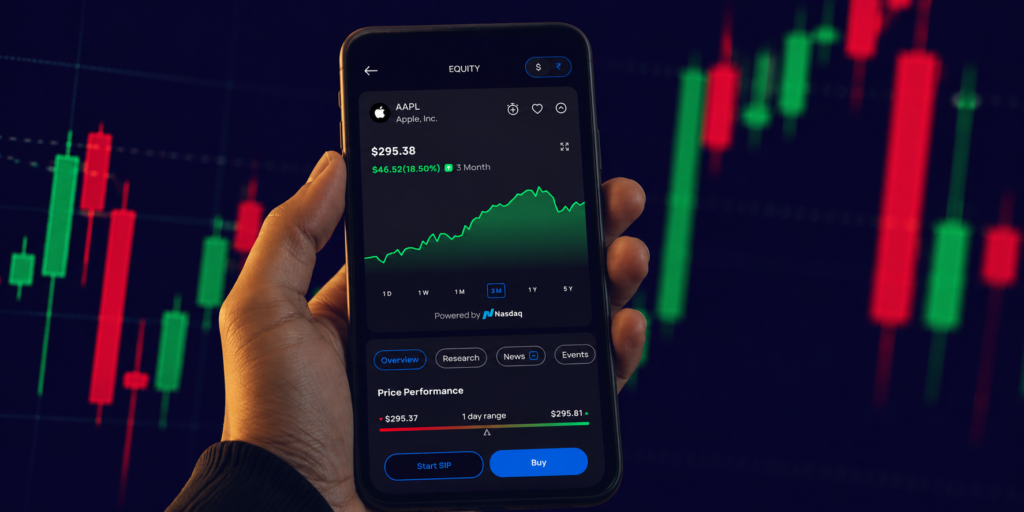
Dollar cost averaging is not limited to mutual funds. Investors can apply it to individual stocks and ETFs by investing a fixed amount monthly or quarterly.
Fractional investing has made this easier, particularly for higher-priced U.S. stocks and ETFs. Regular investments allow exposure to global businesses without requiring large upfront capital.
This approach also helps manage currency exposure gradually, which can be useful in periods where the rupee weakens against the dollar over time.
How Indian investors can use DCA effectively
Dollar Cost Averaging works best when treated as a long-term process rather than a tactical move.
Setting a fixed schedule, choosing assets aligned with long-term goals, and avoiding reactions to short-term noise are key. Periodic reviews help ensure allocations remain aligned, while daily monitoring often adds little value.
When investing globally through Appreciate, DCA allows Indian investors to participate in international markets steadily, without tying outcomes to a single entry point or currency level.
Conclusion
Dollar Cost Averaging is not designed to beat markets through precision. It is designed to keep investors invested through uncertainty.
By lowering timing risk, encouraging discipline, and smoothing volatility, DCA supports long-term wealth creation. In a world shaped by global markets, shifting currencies, and frequent volatility, consistency often proves more powerful than prediction.
Disclaimer: Investments in securities markets are subject to market risks. Read all the related documents carefully before investing. The securities quoted are exemplary and are not recommendatory.