Sensex and Nifty declined on May as escalating US-Iran tensions, crude oil above $110 a barrel, a record-low rupee, persistent FII selling, and F&O expiry pressure weighed heavily on market sentiment.
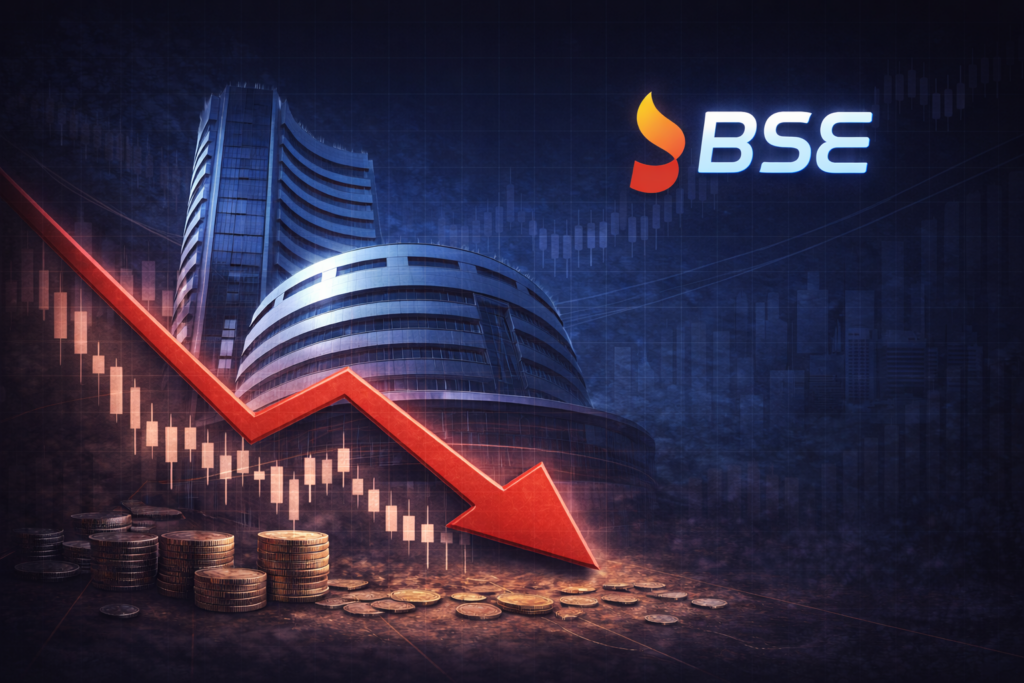
The BSE Ltd share price witnessed a sharp decline after coming under heavy selling pressure in a single trading session. Investors searching for why BSE is down today or why BSE Ltd is falling are reacting to a regulatory signal from SEBI that could reshape India’s derivatives market. Although no formal rule has been announced, the suggestion alone was enough to trigger concerns around BSE’s future revenue growth.
At the heart of the sell-off is a proposal to extend the maturity period of equity derivative contracts — a move that may directly impact trading volumes, transaction fees, and exchange profitability.
Why BSE Share Price Is Falling Today
The immediate trigger behind the fall in BSE Ltd share price is a regulatory comment, not weak earnings or business performance.
SEBI’s leadership indicated that the regulator is exploring ways to shift derivatives trading away from ultra-short-term contracts. Since derivatives form a major revenue engine for exchanges like BSE, the market reacted swiftly.
What Did SEBI Actually Suggest?
SEBI is considering encouraging longer-dated futures and options (F&O) contracts instead of heavy reliance on weekly or near-expiry options.
1. Current Market Structure
- Most options trading in India happens in weekly expiries
- High-frequency, short-term trading dominates volumes
- Retail participation is extremely high
2. Proposed Direction
- Promote monthly or longer-tenure derivative contracts
- Reduce speculative, lottery-style trading behavior
- Improve overall market stability
This idea is still at the discussion stage, but markets tend to price in risk well before rules are finalized.
Why This Proposal Impacts BSE Ltd Share Price
1. Transaction Fee Risk
BSE earns significant transaction fee income from derivatives. Comparing best financial services stocks helps identify which businesses have revenue diversification beyond regulatory-sensitive segments.. Short-term contracts generate:
- More trades
- Higher turnover
- Greater fee collection
Longer-dated contracts usually lead to lower daily churn, even if total exposure remains high. For investors looking to invest in US stocks from India, understanding how exchange businesses earn revenue from trading activity is equally important, as global exchanges can also be affected by changes in market regulations and investor participation.
2. Volume Sensitivity
BSE’s recent earnings growth has been closely linked to the surge in options volumes. Any policy that cools this activity raises questions about:
- Revenue sustainability
- Growth momentum
- Valuation multiples
A Simple Way to Understand the Impact
Think of BSE as a busy metro station.
- Short-distance passengers (weekly trades) enter and exit constantly
- Longer journeys (monthly trades) reduce daily footfall
- Fewer entries mean less ticket revenue per day
That’s exactly what investors fear could happen if derivative tenures are extended.
Why SEBI Wants to Change the Derivatives Market
SEBI’s motivation is rooted in data and investor protection.
Key Reasons:
- Retail losses: Over 90% of retail F&O traders reportedly lose money
- Risk management: Longer contracts are better for hedging than gambling
- Market quality: Excessive short-term trading increases volatility
- Systemic stability: A healthier derivatives ecosystem reduces crash risk
This aligns with SEBI’s earlier actions, such as:
- Limiting weekly expiries per exchange
- Changing expiry schedules
- Tightening risk management norms
How the Market Reacted
1. Institutional Selling
Mutual funds and large investors reduced exposure, amplifying the fall in BSE Ltd share price.
2. Analyst Caution
Brokerages flagged regulatory uncertainty as a key risk and reassessed valuation assumptions tied to derivatives growth. That’s exactly why structured trading education matters before reacting to headlines.
3. Sentiment Shift
Despite strong financials, regulatory risk weighs on sentiment. Learning how to select stocks requires balancing current performance with forward-looking regulatory and structural risks.
BSE’s Strong Financial Performance (Despite the Fall)
The sell-off is not due to weak numbers.
Recent performance highlights:
- Transaction charge revenue surged sharply year-on-year
- Equity derivatives income jumped exponentially over the last two years
- Average daily notional turnover in derivatives hit record levels
- Net profit more than doubled with healthy margins
This makes it clear: the fall is about future risk, not current weakness.
What Investors Should Watch Next
If you’re tracking why BSE is down today, these are the key developments to monitor:
1. SEBI Communication
- Consultation papers
- Draft regulations
- Official timelines
2. Exchange Strategy
- Product redesign
- Fee structure changes
- Incentives to retain volumes
3. Derivatives Volume Trends
- Any sustained drop in weekly options activity
- Shift toward longer-tenure contracts
Bottom Line: Why BSE Ltd Is Falling
The decline in BSE Ltd share price is driven by regulatory uncertainty, not deteriorating business fundamentals.
SEBI’s intent to extend derivatives contract maturity could reduce trading frequency in the most lucrative segment of the exchange business. Until there’s clearer guidance on how and when changes will be implemented, investors are likely to remain cautious.
FAQs on Why BSE share price is falling
BSE share price is falling due to concerns over SEBI’s proposal to extend derivatives contract maturity. Investors fear this could reduce trading volumes and transaction fee income, which form a major part of BSE’s revenue.
No. BSE has reported strong revenue and profit growth. The stock is falling mainly because of regulatory uncertainty around the derivatives segment, not because of weak financial performance.
Derivatives trading generates transaction fees for BSE. Short-term options contracts lead to frequent trades and higher daily turnover, which boosts exchange revenue significantly.
If implemented, longer-tenure derivatives could reduce daily trading activity. While total exposure may remain high, lower churn could impact transaction fee income for exchanges like BSE.
No. The idea is still under discussion. However, markets tend to react early to potential regulatory changes, which is why the stock corrected even before any formal announcement.
Long-term investors should monitor regulatory developments closely. While BSE’s fundamentals remain strong, sustained changes in derivatives trading behavior could influence future growth rates.
Yes. BSE may introduce new products, adjust pricing, or innovate trading incentives to offset any impact from reduced short-term derivatives volumes.
Disclaimer: Investments in securities markets are subject to market risks. Read all the related documents carefully before investing. The securities quoted are exemplary and are not recommendatory.