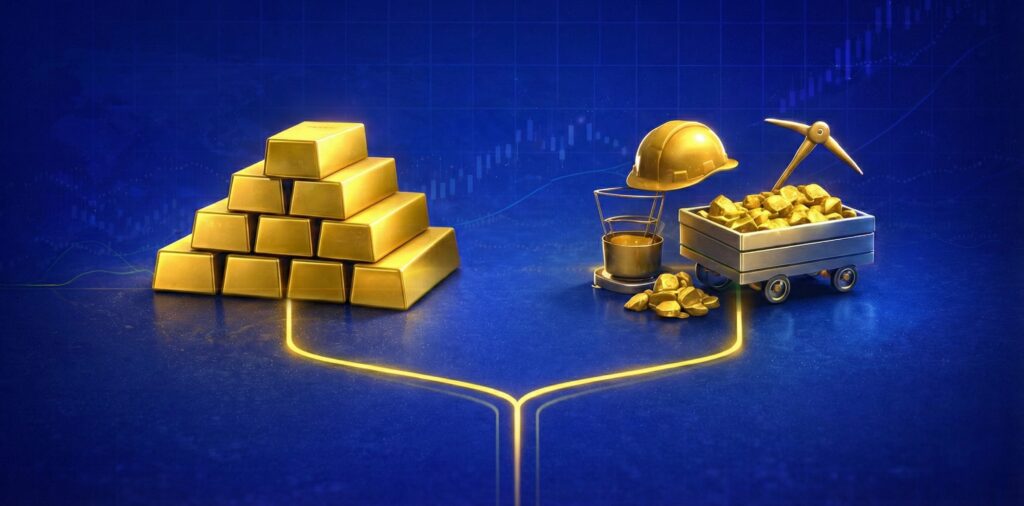
Gold remained one of the standout asset themes in 2025, with bullion prices climbing strongly and related equities delivering even more dramatic performance. In this environment, comparing GDX vs RING helps investors decide whether to seek leveraged exposure through broad mining equities or a more diversified, equal-weighted approach to gold miners. Both ETFs track global miner performance, but subtle differences in methodology and risk profile can produce meaningfully different outcomes.
For Indian investors and global allocators alike, access to U.S. ETFs like these is easier than ever through platforms like Appreciate, supporting diversified exposure to global themes beyond domestic markets.
What Is GDX and How It Gets Gold Exposure
The VanEck Gold Miners ETF (GDX) owns a broad, market-capitalisation-weighted basket of global gold mining companies by tracking the NYSE Arca Gold Miners Index. This structure means GDX reflects not only gold price movements but also corporate factors such as production costs, earnings growth, reserve expansion, and operational execution.
When gold prices rise, miners can benefit disproportionately because their fixed costs remain stable while revenue and profit margins expand. In 2025, that dynamic was especially powerful: GDX delivered a total return of approximately ~60% for the year, significantly outpacing bullion and broader equity markets. This strong showing underscores how operating leverage to gold prices can amplify returns when commodity cycles turn bullish.
However, that leverage cuts both ways. Mining stocks can lag bullion when gold prices rise modestly or when broader equity sentiment sours. Corporate risks such as cost inflation, geopolitical exposure, and capital expenditure cycles also influence returns beyond the metal price itself.
What Is RING and How It Differs in Exposure
The iShares MSCI Global Gold Miners Equal Weighted ETF (RING) takes a different approach. Rather than weighting holdings by market capitalisation, RING applies an equal-weight methodology across its constituent gold mining companies. This means that smaller miners have proportionally higher influence in the index compared to market-cap-weighted peers like GDX.
In 2025, RING also delivered strong performance, with a total return near ~150%, slightly trailing GDX but still well ahead of gold bullion itself. The equal-weight approach can reduce concentration risk particularly when a few large producers dominate a market-cap index and can allow smaller or mid-cap miners with strong growth prospects to contribute meaningfully to returns.
Because RING gives systematic exposure to a broader range of mining firms, its risk profile can differ from GDX. RING’s returns often exhibit less concentration risk, but its volatility can remain elevated relative to bullion-tracking funds, as mining equities large and small tend to move in concert with both gold prices and equity market sentiment.
Difference Between GDX and RING in Risk and Returns
The difference between GDX and RING emerges most clearly in how each ETF weights its underlying holdings and how that affects return dispersion:
- GDX’s market-cap weight concentrates exposure in the largest gold producers. In 2025, the leadership of those large names often with stronger balance sheets and predictable cash flows boosted overall performance early in the rally.
- RING’s equal-weight methodology allowed smaller miners to participate in the upswing more directly, reducing concentration risk but increasing sensitivity to individual company performance.
Both funds track gold miners and hence tend to move in the same direction when gold rallies. However, GDX’s broader weighting of large caps can produce slightly higher returns in periods when majors outperform. RING’s structure can enhance participation in mid-tier miner strength, but may lag when large producers lead the cycle.
Expense ratios and liquidity also differ slightly. GDX usually offers higher trading volumes and deeper liquidity, while RING’s equal-weight structure may appeal to investors seeking diversified exposure across mining company sizes.
How Macro Forces Shape Miners vs Gold Prices
Gold price movements driven by real interest rates, geopolitical stress, and central-bank demand shape both ETFs indirectly. However, mining ETFs like GDX and RING add corporate performance factors on top of metal prices. That enhancement amplifies both gains and losses relative to direct metal price exposure.
Rising gold tends to improve miner cash flows and reserve valuations, supporting equity performance. At the same time, equity market conditions credit spreads, rate expectations, and sector rotation influence how miners trade relative to bullion. These factors help explain the large 2025 returns for both GDX (~60%) and RING (~150%).
When Each ETF Makes Sense
Investors often choose based on risk tolerance and thematic conviction. GDX suits those seeking broad, leveraged exposure to gold miners, with low concentration risk and high liquidity. Its market-cap weight leans heavier on large producers that may better navigate volatility.
RING appeals to investors seeking a more balanced exposure across mining companies, including smaller and mid-tier producers that can outperform in strong cycles. While both are more volatile than physical gold, their returns can outpace bullion significantly during commodity upswings.
Practical Perspective for Indian Investors
For Indian investors, domestic access to gold miners is limited. U.S.–listed ETFs like GDX and RING provide global mining exposure that complements domestic gold products such as sovereign gold bonds and gold ETFs. Platforms like Appreciate enable Indian investors to access these global instruments seamlessly, adding diversification across sectors and macro drivers. For investors looking to invest in US stocks from India, global ETFs like GDX and RING provide an efficient way to gain exposure to international gold mining companies without purchasing individual overseas stocks.
Currency exposure adds another layer of diversification; however, investors should view exchange effects as secondary to the underlying thematic exposures.
Conclusion
Choosing between GDX and RING is ultimately a matter of exposure preference and risk appetite. GDX’s market-cap weight tends to offer slightly higher upside in strong commodity rallies, while RING’s equal-weight structure provides broader participation across the mining universe.
Understanding what GDX is and what RING is as well as how each behaved in 2025, equips investors to allocate strategically rather than emotionally. Used thoughtfully, both ETFs can play complementary roles in diversified portfolios that seek to balance return potential with risk management in markets shaped by macro forces and precious-metal demand.
Disclaimer: Investments in securities markets are subject to market risks. Read all the related documents carefully before investing. The securities quoted are exemplary and are not recommendatory.