In January 2024, the US Securities and Exchange Commission approved the first spot Bitcoin ETF — a landmark moment for crypto markets globally. Products from BlackRock (IBIT), Fidelity (FBTC), and others attracted over $50 billion in assets within months. For Indian investors watching from the sidelines, a critical question emerged: can we access Bitcoin ETFs — and should we?
The short answer: yes, Indian investors can access US-listed Bitcoin ETFs through international investing platforms — but with important regulatory, tax, and currency considerations to understand first. This guide covers everything you need to know, including a step-by-step method, the current status of crypto ETFs in India, and the specific process for investing in BlackRock’s IBIT.
This guide cuts through the confusion: what Bitcoin ETFs are, why you cannot buy them on Indian exchanges yet, how to invest using the LRS route, what it will cost you, and what the regulatory horizon looks like in 2026.
What This Guide Covers
Key risks Indian investors must understand
What a Bitcoin ETF is and how it works
Spot vs futures Bitcoin ETF comparison
Step-by-step: how to invest in Bitcoin ETF from India
Specific guide: how to invest in BlackRock Bitcoin ETF (IBIT) from India
Current status of crypto ETFs in India and SEBI regulations
Tax implications under Indian law
What Is a Bitcoin ETF?
A Bitcoin ETF (Exchange-Traded Fund) is a regulated financial product that tracks the price of Bitcoin and trades on traditional stock exchanges — just like a Nifty BeES or a gold ETF. You do not need a crypto wallet, private keys, or a crypto exchange account. You simply buy shares through a brokerage.
There are two types. Understanding the difference matters before you invest:
| Type | How It Works | Price Accuracy | Best For |
| Spot Bitcoin ETF | Holds actual Bitcoin in custody | Very high — tracks real Bitcoin price | Long-term investors seeking direct exposure |
| Futures-Based Bitcoin ETF | Holds Bitcoin futures contracts (not real Bitcoin) | Lower — tracking errors due to roll costs | Short-term traders; not ideal for buy-and-hold |
In January 2024, the US SEC approved 11 spot Bitcoin ETFs simultaneously — a historic moment after a decade of rejections. BlackRock’s iShares Bitcoin Trust (ticker: IBIT) quickly became the largest, and by 2026 IBIT alone holds over $73 billion in AUM, making it one of the fastest-growing ETFs in history.
Key point: A spot Bitcoin ETF lets you own regulated exposure to Bitcoin’s price — without touching a crypto exchange, managing wallets, or worrying about custody risks.
Bitcoin ETF in India: The Regulatory Reality in 2026
Here is the honest answer that most blogs skip: India does not have a domestic Bitcoin ETF. SEBI has not approved any crypto ETF for trading on NSE or BSE, and the RBI continues to express reservations about digital assets as investment products.
What the current regulatory landscape looks like:
- Cryptocurrencies are legal to hold and trade in India but are not recognized as legal tender
- No Indian crypto ETF or regulated mutual fund investing in crypto is approved by SEBI or RBI
- India taxes Virtual Digital Asset (VDA) gains at a flat 30% with no deductions, plus 1% TDS on transactions
- The IFSCA (GIFT City) restricted crypto ETF access for Indian residents in September 2025, citing investor protection concerns
- A dedicated Indian Crypto Act is still pending — regulatory clarity is expected in 2026–27
Why Bitcoin ETFs Are a Game-Changer for Indian Crypto Investors
Before Bitcoin ETFs existed, Indian investors had limited and often risky options: buy BTC on a domestic exchange (facing regulatory uncertainty), hold in a self-custody wallet (complex for non-technical users), or skip crypto entirely.
Bitcoin ETFs change this equation significantly:
- Regulated structure: US-listed ETFs are overseen by the SEC — offering investor protections absent in offshore crypto exchanges
- No wallet risk: no risk of losing access to funds through lost private keys or exchange hacks
- Familiar access: accessible through the same international brokerage platforms Indian investors already use to invest in US stocks from India, making Bitcoin ETFs easier to access than many investors assume
- Institutional credibility: BlackRock, the world’s largest asset manager, backing IBIT signals mainstream legitimacy
- Liquidity: Bitcoin ETFs trade on NYSE/Nasdaq with tight spreads and high daily volumes
How to Invest in Bitcoin ETF from India: The LRS Route (Step-by-Step)
Under the Liberalised Remittance Scheme, any investment sold before 36 months attracts short-term capital gains tax. Readers comparing overseas instruments may also want to review the tax implications for Indian investors in US stocks.
Step-by-Step: Buying BlackRock Bitcoin ETF (IBIT) from India
- Open an international brokerage account — platforms like Appreciate Wealth, Vested, INDmoney, or a US broker like Interactive Brokers that accepts Indian residents.
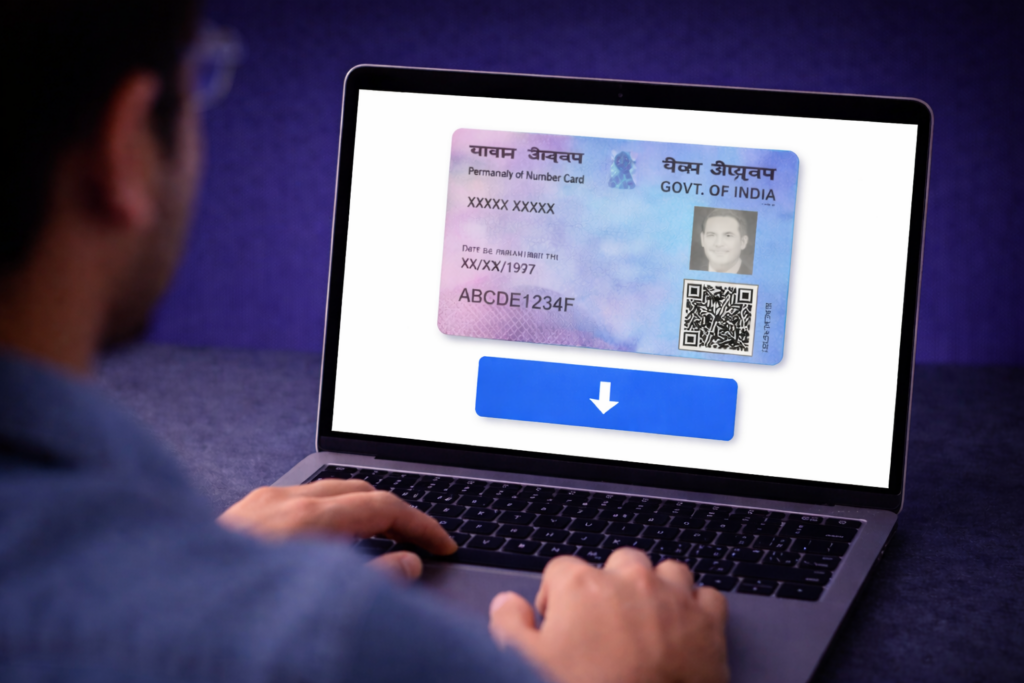
- Complete your KYC: Submit PAN card, Aadhaar, and bank proof. Most platforms complete this in 24–48 hours.
- Transfer funds under LRS: Initiate a wire transfer from your Indian bank account. Your bank will require Form A2 and a declaration. TCS of 20% applies on remittances above ₹7 lakh (this is creditable against your final tax liability).
- Search for the ETF by ticker: For BlackRock Bitcoin ETF, search IBIT. Other options include FBTC (Fidelity) and BTCO (Invesco).
- Place your order: These ETFs trade on US exchanges (NASDAQ/NYSE) during US market hours (9:30 PM – 4:00 AM IST). Most Indian platforms allow pre-market orders.
- Track and manage: Monitor your holding in INR or USD. Gains are taxed as foreign asset income in India — not as crypto/VDA.
Top US-Listed Bitcoin ETFs Available to Indian Investors in 2026
| ETF Name | Ticker | Issuer | AUM (approx.) | Annual Fee |
| iShares Bitcoin Trust | IBIT | BlackRock | $73B+ | 0.25% |
| Fidelity Wise Origin Bitcoin Fund | FBTC | Fidelity | $25B+ | 0.25% |
| Bitwise Bitcoin ETF | BITB | Bitwise | $5B+ | 0.20% |
| Invesco Galaxy Bitcoin ETF | BTCO | Invesco | $1B+ | 0.25% |
| VanEck Bitcoin ETF | HODL | VanEck | $1.5B+ | 0.20% |
Why Indian Investors Are Choosing Bitcoin ETFs Over Direct Crypto
Many Indian investors already buy Bitcoin directly through exchanges like CoinDCX or WazirX. So why choose an ETF instead? Here is a direct comparison:
| Factor | Bitcoin ETF (via LRS) | Direct Bitcoin (Indian Exchange) |
| Regulation | US SEC regulated product | Not SEBI regulated |
| Custody risk | Institutional custodian (Coinbase) | Platform/exchange risk |
| Tax treatment | Foreign asset capital gains | Flat 30% VDA tax + 1% TDS |
| Min. investment | ~$10–50 per share | No minimum (fractional) |
| Wallet management | Not required | Required for self-custody |
| Access | Via LRS + international broker | Indian crypto exchange |
| Liquidity | NYSE/NASDAQ trading hours | 24/7 on Indian exchanges |
The key advantage of the ETF route is institutional-grade custody and a regulated wrapper. BlackRock uses Coinbase Prime as custodian — the world’s largest institutional crypto custodian — providing a level of security no Indian retail crypto exchange can match.
What are the benefits of investing in spot Bitcoin ETFs?
First and foremost, by investing in Bitcoin ETFs investors will be able to gain exposure to a cutting-edge asset class, which has been progressively becoming more and more popular in the last two decades. Millions of people around the globe have been channelling their savings into cryptocurrencies, operating under the belief that cryptocurrencies will be an important medium of exchange in the future.
Whether this turns out to be true or not is for the future to tell, however, several cryptocurrencies have delivered stellar market returns.
- By investing in cryptocurrencies, investors can diversify their portfolios and balance traditional instruments with new-age digital assets like Bitcoin. This is a strong place to link to a guide on how to diversify their portfolios effectively
- Mainstreaming of Bitcoin ETFs will lure in funds from institutional and retail investors worldwide. This will enhance the liquidity in the ETFs, deliver stronger returns and make them more reliable.
- Bitcoin ETFs provide exposure to the cryptocurrency, helping investors cash in on sudden market movements.
- Since the ETF funds will be regulated by the US market regulators, investors will also have assurance of the safety of their investments.
Tax Implications for Indian Investors: What You Must Know Before Investing
Disclaimer: Tax laws change. Always consult a chartered accountant before investing via LRS. The information below is for educational purposes only.
If You Buy a US Bitcoin ETF via LRS:
- Gains from US ETF sales are treated as foreign asset capital gains — not as VDA/crypto income
- Short-term gains (held under 24 months): Taxed at your applicable income slab rate
- Long-term gains (held over 24 months): Taxed at 12.5% (post Finance Act 2024 changes)
- No 1% TDS at source — that applies only to direct crypto transactions on Indian platforms
- 20% TCS applies on LRS remittances over ₹7 lakh — but this is adjustable against your total tax payable
- Foreign assets must be declared in Schedule FA of your ITR every year, even if no sale occurs
If You Buy Bitcoin Directly on an Indian Exchange:
- Flat 30% tax on every gain, no exceptions
- No set-off of losses against other income or other crypto gains
- 1% TDS deducted on every sale transaction
- Treated as VDA income under Section 115BBH of the Income Tax Act
The tax treatment of US Bitcoin ETFs is materially different and potentially more favorable for long-term holders compared to direct crypto on Indian exchanges.
Key Risks Every Indian Investor Must Understand
- Bitcoin volatility: Bitcoin has historically dropped 50–80% in bear markets. Even the best ETF wrapper does not protect against price risk
- Currency risk: USD/INR movement affects your returns when converting back to rupees
- LRS limits: You have a USD 250,000 annual ceiling across all foreign investments
- Regulatory risk in India: Future SEBI or RBI circulars could restrict or modify the LRS route for crypto-linked products
- Tracking difference: ETF management fees (0.20–0.25%) create a small ongoing drag versus holding Bitcoin directly
US tax treaty: India and the US have a DTAA, but you should confirm withholding tax applicability with a CA
Are There Any Mutual Funds Investing in Cryptocurrency in India?
No. As of 2026, no Indian mutual fund or SEBI-registered fund is permitted to invest directly in cryptocurrency or crypto ETFs. The IFSCA (GIFT City) also restricted access to crypto ETF products for Indian residents in September 2025.
What does exist — indirect exposure options:
- International funds of funds that hold global tech ETFs (some hold minor indirect crypto exposure via companies like Coinbase or MicroStrategy)
- GIFT City IFSC route: High-net-worth individuals may access certain structured products through IFSC-registered wealth managers, subject to eligibility criteria
- INDmoney, Vested, and Mudrex: These platforms facilitate direct purchase of US Bitcoin ETFs under LRS — not through mutual fund structures
Bottom line: If you want direct Bitcoin ETF exposure as an Indian investor today, the LRS-based international brokerage route is currently the clearest and most accessible path.
Conclusion:
Bitcoin ETFs are a genuine financial innovation — offering regulated, institutional-grade exposure to the world’s largest cryptocurrency without the custody complexity of holding Bitcoin directly. For Indian investors, the LRS route to buy US-listed ETFs like BlackRock’s IBIT is legal, accessible, and increasingly straightforward through platforms like Appreciate Wealth.
That said, Bitcoin remains a high-risk, high-volatility asset. A 1–5% portfolio allocation is a commonly cited range for investors willing to accept the risk. Before investing, ensure you understand the LRS remittance process, the tax implications as a foreign asset, and your own risk tolerance.
India’s own regulatory journey toward domestic crypto ETFs is ongoing — and when SEBI eventually moves, Indian investors who have already built their understanding of this asset class will be best positioned to act.
FAQs Bitcoin ETFs in 2026
Yes. Indian investors can legally buy US-listed Bitcoin ETFs like BlackRock’s IBIT through the RBI’s Liberalised Remittance Scheme (LRS), allowing up to USD 250,000 per year in overseas investments via international brokerage platforms.
No. As of 2026, SEBI has not approved any domestic Bitcoin ETF or crypto ETF for trading on Indian exchanges. The regulatory framework for cryptocurrency-linked investment products in India is still being developed.
Open an account on an international brokerage platform (such as Appreciate ), complete KYC, remit funds under LRS from your Indian bank account, and buy IBIT shares on NASDAQ during US market hours.
US Bitcoin ETF gains are taxed as foreign asset capital gains — not as crypto (VDA) income. Long-term gains (held over 24 months) are taxed at 12.5%. Short-term gains are taxed at your applicable income slab rate. Foreign assets must be declared in Schedule FA of your ITR annually.
No. No Indian mutual fund is currently permitted by SEBI to invest directly in cryptocurrency. Some international fund-of-funds may hold indirect exposure through companies like Coinbase or MicroStrategy, but no direct crypto mutual fund is approved in India.
Under the RBI’s Liberalised Remittance Scheme, Indian residents can remit up to USD 250,000 per financial year. A 20% TCS applies on remittances exceeding ₹7 lakh, which is adjustable against your final tax liability when filing returns.
BlackRock’s iShares Bitcoin Trust (IBIT) is the most popular choice — with over $73B AUM and the highest liquidity. Fidelity’s FBTC and Bitwise’s BITB are strong alternatives. IBIT’s 0.25% annual fee and institutional custodian make it the most trusted option.
Disclaimer: Investments in securities markets are subject to market risks. Read all the related documents carefully before investing. The securities quoted are exemplary and are not recommendatory.