Financial markets may appear complex, but at their core, they operate on a simple principle: buyers and sellers compete to agree on a price. This process, repeated continuously throughout the trading day, is known as an auction market. It is the foundation on which modern stock exchanges function, from India’s equity markets to global exchanges in the United States.
Understanding how an auction market works helps investors make sense of price movements, trading volume, and why markets react the way they do to news and events.
Understanding the Auction Market
An auction market is a market structure where prices are determined through open competition between buyers and sellers. Buyers place bids showing the maximum price they are willing to pay, while sellers place offers indicating the minimum price they are willing to accept. A trade occurs when these two prices match.
Unlike markets where prices are set by intermediaries, an auction market allows prices to emerge naturally based on supply and demand. Every transaction reflects the most recent agreement between participants, making price discovery transparent and dynamic.
Most stock exchanges operate as auction markets, using electronic systems to match orders in real time.
How Price Discovery Happens
At the centre of an auction market is the order book. This is a live record of all buy and sell orders, organised by price. Higher bids reflect stronger buying interest, while lower offers reflect stronger selling pressure.
When a new order enters the system, it is matched against existing orders based on price and time priority. If a buyer is willing to pay the price a seller is asking, the trade is executed immediately. That transaction becomes the latest traded price.
This continuous interaction explains why prices fluctuate throughout the day. Each new order slightly shifts the balance between demand and supply.
Opening and Closing Auctions
Auction markets operate in different phases during the trading day.
At the opening auction, orders are collected without immediate execution. The exchange then determines a single opening price that allows the maximum number of shares to trade. This helps establish a stable starting price, especially after overnight developments.
During the continuous auction, trades happen in real time. This is when most investors place orders and observe intraday price movements.
At the closing auction, orders are again pooled and matched at one final price. This closing price is important because it is used for index calculations, fund valuations, and portfolio reporting.
Auction Market vs Dealer Market
An auction market is distinct from a dealer market. In a dealer market, prices are quoted by intermediaries who stand ready to buy or sell. Investors trade with the dealer rather than directly with each other.
In contrast, an auction market allows buyers and sellers to interact directly. This generally leads to better price transparency and narrower bid–ask spreads in liquid securities.
Why Auction Markets Matter for Investors
Auction markets create a level playing field. Prices reflect collective market behaviour rather than the judgment of a single participant. This makes markets more efficient over time.
They also explain short-term volatility. Sudden changes in demand or supply, large orders, or new information can quickly shift prices. Understanding this helps investors avoid overreacting to normal market movements.
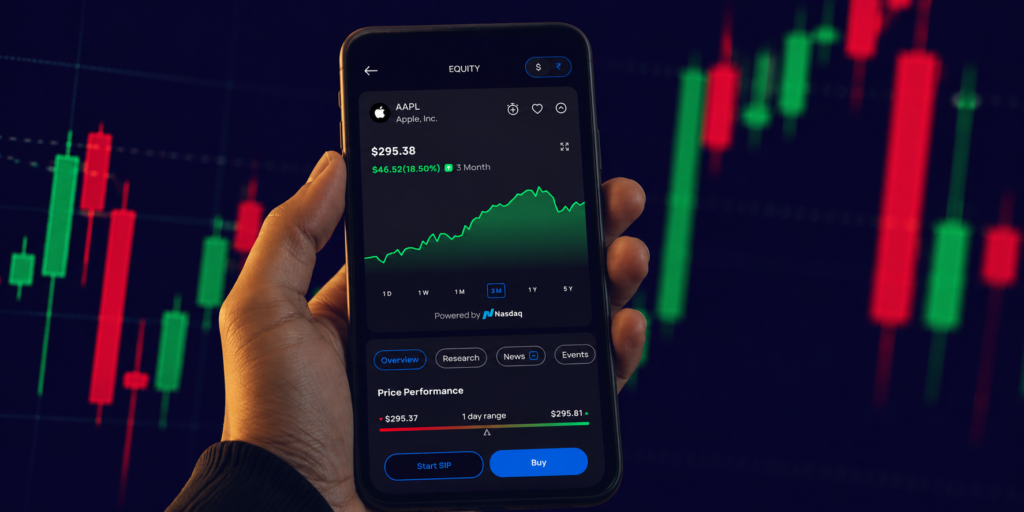
For Indian investors trading domestic stocks or choosing to invest in US stocks from India through platforms like Appreciate, recognising that every trade is part of an ongoing auction clarifies why execution prices vary and why limit and market orders behave differently.
Using Auction Markets to Your Advantage
Investors who understand auction markets tend to place better orders. Limit orders help control price, while market orders prioritise speed. Higher liquidity periods, such as near the market open or close, often allow smoother execution.
Most importantly, auction markets reinforce a key investing lesson: prices are not arbitrary. They are the outcome of thousands of competing decisions, processed continuously in real time.
Conclusion
An auction market is the engine that drives modern financial markets. By bringing buyers and sellers together in an open, competitive process, it ensures transparent price discovery and efficient trading.
For investors, understanding how auction markets work provides clarity—not just about how prices are set, but about how markets behave. In the end, every trade you place is simply one more bid or offer in a global, ongoing auction.
Disclaimer: Investments in securities markets are subject to market risks. Read all the related documents carefully before investing. The securities quoted are exemplary and are not recommendatory.