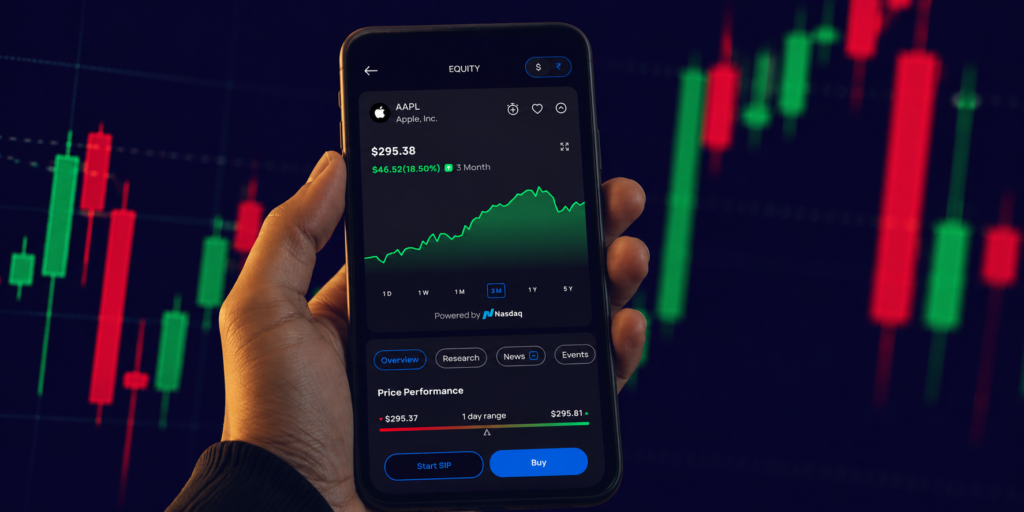
Forex trading, short for foreign exchange trading, refers to the buying and selling of currencies in the global currency market. It is the world’s largest and most liquid financial market, with daily turnover exceeding $7 trillion, significantly larger than that of equities or commodities. Unlike stock markets, forex operates 24 hours a day, five days a week, reflecting the continuous flow of global trade, capital, and investment.
At its core, forex trading is about relative value. Every transaction involves a currency pair, where one currency is exchanged for another based on expectations around interest rates, inflation, economic growth, and central bank policy. These forces make currencies a real-time expression of macroeconomic conditions rather than company-specific fundamentals.
How the Forex Market Works
Currencies are traded in pairs because the value of any currency is always measured relative to another. If USD/INR rises, the U.S. dollar is strengthening against the Indian rupee. Traders and investors position themselves based on how they expect these relationships to evolve.
The forex market is decentralised, operating through a global network of banks, financial institutions, corporations, hedge funds, and retail participants rather than a single exchange. Major financial centres such as London, New York, Tokyo, and Singapore ensure near-continuous liquidity as trading activity moves across time zones.
What Drives Currency Movements
Interest-rate differentials are the most powerful driver of currency prices. When a country offers higher real interest rates, it typically attracts capital, strengthening its currency. This is why decisions by central banks, particularly the U.S. Federal Reserve, can trigger sharp and immediate movements in foreign exchange (forex) markets.
Macroeconomic indicators such as inflation, employment, GDP growth, and trade balances also influence exchange rates. During periods of global uncertainty, investor risk sentiment becomes critical, often pushing flows toward perceived safe-haven currencies and away from higher-risk or emerging-market currencies.
Accessing Currency Exposure Without Trading Forex Directly
While traditional forex trading often involves derivatives, leverage, and short-term speculation, investors can also express currency views through exchange-traded funds. Currency ETFs provide exposure via regulated, exchange-listed instruments that track currency movements without requiring participation in spot or futures markets.
For Indian investors, global investing platforms such as Appreciate make it possible to access these U.S.-listed currency ETFs alongside international stocks and other global assets, all within a single platform. For those looking to invest in US stocks from India, these platforms also provide access to a wide range of global investment opportunities beyond domestic markets. This allows investors to express macro views such as dollar strength or weakness, or hedge currency exposure without engaging in leveraged forex trading.
Currency ETFs for Expressing Forex Views
| Ticker | ETF Name | Tracking Focus |
| UUP | Invesco DB US Dollar Index Bullish Fund | U.S. dollar strength versus a basket of major global currencies |
| USDU | WisdomTree Bloomberg U.S. Dollar Bullish Fund | Broad U.S. dollar appreciation across developed and emerging markets |
| UDN | Invesco DB US Dollar Index Bearish Fund | U.S. dollar weakness relative to major global currencies |
| FXA | Invesco CurrencyShares Australian Dollar Trust | Australian dollar movements against the U.S. dollar |
| FXB | Invesco CurrencyShares British Pound Sterling Trust | British pound sterling performance versus the U.S. dollar |
| FXC | Invesco CurrencyShares Canadian Dollar Trust | Canadian dollar exposure linked to commodity and energy cycles |
Risks and the Need for Caution
Currency markets are heavily influenced by policy decisions, geopolitical developments, and shifts in global capital flows that can change quickly. Exchange rates can remain range-bound for long periods, limiting returns, while sudden central-bank surprises can trigger sharp moves. As a result, currency exposure is best used selectively, with careful position sizing and a clear understanding of macro risk.
Conclusion
Forex trading reflects how money moves across borders in response to economic policy, growth expectations, and investor sentiment. Whether accessed directly or through currency ETFs, it is a market driven by macro forces rather than individual narratives. For Indian investors using platforms like Appreciate, the opportunity lies not in constant trading but in using currencies thoughtfully as tools for diversification, hedging, and expressing informed global views.
Disclaimer: Investments in securities markets are subject to market risks. Read all the related documents carefully before investing. The securities quoted are exemplary and are not recommendatory.