Markets rarely move in straight lines. Prices rise, pause, pull back, and then move again. Traders who understand this rhythm often focus less on predicting exact tops and bottoms and more on staying aligned with the dominant move. This approach is commonly referred to as riding the wave in trading.
Riding the wave is not about catching every price fluctuation. It is about recognising momentum early and staying with it as long as conditions remain favourable. For many traders, especially those active in intrading, this mindset helps reduce overtrading and emotional decision-making.
Understanding the Idea of Wave Trading
Wave trading is based on the observation that price movements occur in waves rather than random noise. A market typically moves in a direction for a period, pauses or corrects, and then resumes its move. Each of these movements forms a wave.
A wave trading strategy focuses on entering trades when a new wave begins and exiting when momentum weakens. Instead of reacting to every small move, traders concentrate on the broader price structure and trend strength.
This approach draws inspiration from classic market behaviour theories but is applied in a simplified, practical way for modern trading.
How the Wave Strategy Works in Practice
The core principle of a wave strategy is alignment. Traders aim to align themselves with the prevailing trend rather than fight it.
In an uptrend, the wave strategy looks for higher highs and higher lows. Pullbacks are treated as potential entry opportunities rather than signals to exit immediately. In a downtrend, lower highs and lower lows guide short positions.
Indicators such as moving averages, momentum oscillators, and trendlines are often used to confirm wave direction. However, the emphasis remains on price action rather than indicator signals alone.
Riding the Wave in Intraday Trading
In trading, wave trading helps traders stay patient during strong directional moves. Instead of entering and exiting repeatedly, traders attempt to ride a single wave for as long as momentum holds.
For example, if a stock shows consistently higher lows after a breakout, a wave trader may stay invested through minor pullbacks rather than exiting too early. This allows profits to grow while avoiding unnecessary churn.
Intraday wave trading works best in liquid stocks and indices, where price movement is smoother and less erratic.
Why Traders Use Wave Trading Strategies
One reason wave trading appeals to traders is simplicity. The strategy reduces the need for constant decision-making. Once a wave is identified, the trader’s job becomes managing risk rather than chasing new signals.
Another advantage is emotional control. Riding the wave discourages impulsive trades triggered by fear of missing out or short-term noise. Traders focus on structure instead of reacting to every candle.
Wave trading also aligns well with risk management. Stops are often placed below recent swing lows in an uptrend or above swing highs in a downtrend, keeping risk defined.
Limitations of Wave Trading
Despite its strengths, wave trading is not foolproof. Markets do not always trend. During range-bound or choppy conditions, waves can be short-lived and unreliable.
False breakouts and sudden reversals can trap traders who enter too aggressively. This makes patience essential. Waiting for confirmation before committing capital is a key part of the wave trading strategy.
Another limitation is psychological. Riding a wave requires resisting the urge to book profits too early. Many traders exit winning trades prematurely, reducing the effectiveness of the strategy.
Who is Wave Trading Best Suited For?
Wave trading suits traders who prefer clarity over constant action. It works well for those who value structure, trend-following, and disciplined execution.
Beginners often find wave trading easier to understand than complex indicator-based systems. At the same time, experienced traders use it to refine entries and exits within broader strategies.
Whether trading intraday or over slightly longer horizons, wave trading adapts well across timeframes when applied consistently.
Applying Wave Trading Across Markets
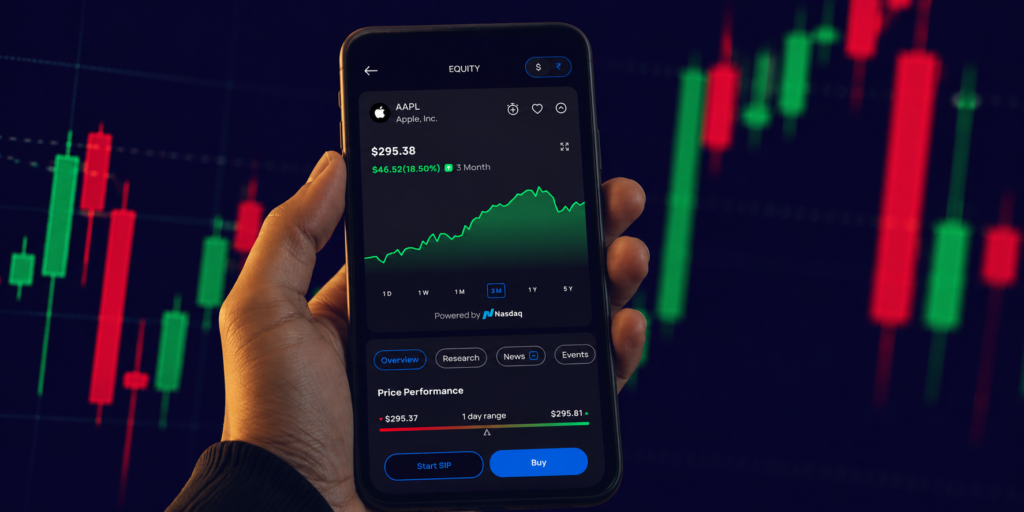
As Indian traders gain access to global markets, the principles of wave trading remain consistent. Platforms like Appreciate allow investors and traders to observe wave behaviour across Indian equities and international stocks, reinforcing the idea that price structure often repeats across markets. For investors looking to invest in US stocks from India, applying wave trading principles across global markets can help identify trends in internationally listed companies and diversify trading opportunities beyond domestic equities.
Seeing how trends unfold globally can help traders build confidence in the wave strategy without relying on market-specific assumptions.
Conclusion
Riding the wave in trading is about working with the market, not against it. A wave trading strategy focuses on momentum, structure, and patience rather than prediction.
For traders engaged in intrading or short-term trading, wave trading offers a disciplined framework that prioritises trend alignment and risk control. While it does not eliminate losses, it helps traders stay focused on what matters most: letting winning trades run while cutting losses early.
Used with consistency and restraint, wave trading can become a powerful tool in a trader’s decision-making process.
Disclaimer: Investments in securities markets are subject to market risks. Read all the related documents carefully before investing. The securities quoted are exemplary and are not recommendatory.