Understanding MCX trading time and overall commodity market timing in India is essential for traders who want to manage risk and improve profitability. Unlike equity markets, commodity markets operate across global time zones, making prices highly sensitive to international developments. Knowing when different commodities are most active helps traders enter and exit positions with better liquidity, tighter spreads, and stronger price movements.
This guide explains commodity market timing in India, MCX trading hours, session-wise activity, and the best times to trade based on volume, volatility, and global market overlap. Timing is crucial when trading commodities on an intraday basis. Learning how to select stocks for intraday trading can help you apply similar technical analysis principles to commodity markets.
What Is Commodity Market Timing?
Commodity market timing refers to the specific hours during which commodities are actively traded on Indian exchanges like MCX. These timings are influenced by:
- Global commodity exchanges
- International demand and supply cycles
- Time zones of major economies
Since commodities such as gold, crude oil, metals, and agricultural products are globally traded, Indian markets align their hours with international sessions. Understanding precious metals as a commodity and their role in portfolio diversification can enhance your commodity market strategy.
Commodity Market Timing in India
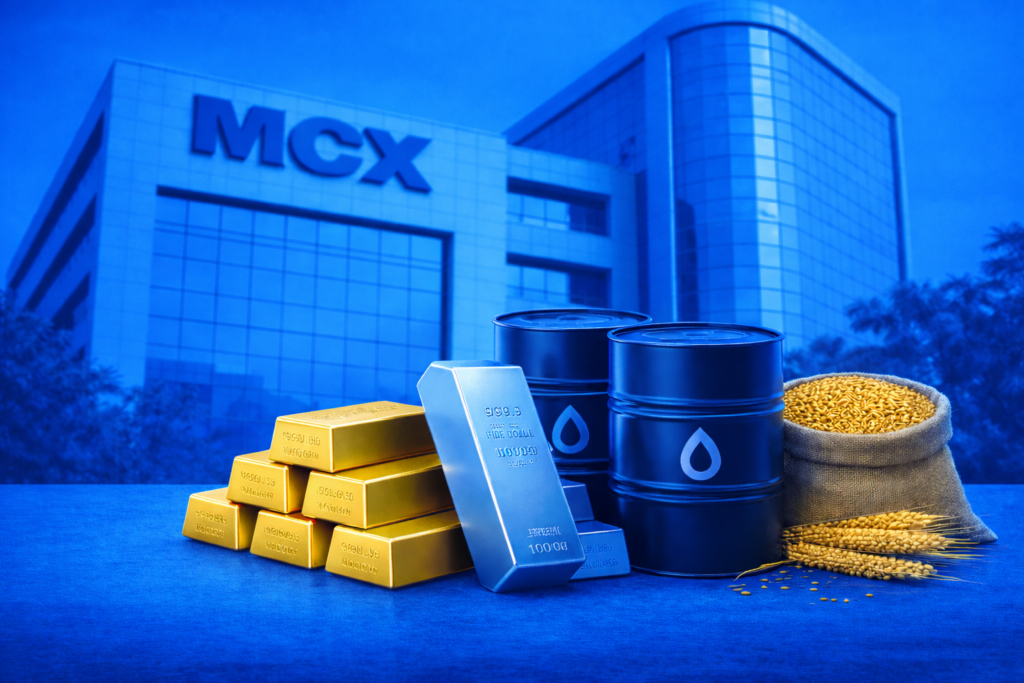
Commodity trading in India primarily happens through the Multi Commodity Exchange (MCX). Unlike stock markets, commodity exchanges operate in two sessions to capture global price movements.
MCX Trading Time (Regular Sessions)
Morning Session
- 9:00 AM to 5:00 PM
Evening Session
- 5:00 PM to 11:30 PM / 11:55 PM
The closing time varies depending on whether Daylight Saving Time (DST) is active in international markets.
Also Read: US Stock Market Timings in India
Pre-Open Session in MCX
MCX also provides a short pre-market window:
- 8:45 AM to 8:59 AM
- Duration: 14 minutes
During this time, traders can:
- Modify or cancel pending orders
- Prepare positions before live trading begins
This session improves price discovery and reduces opening volatility.
Commodity Trading Sessions Based on Global Markets
Commodity prices move in sync with global trading sessions.
Major Global Commodity Sessions
- Asian Session
- European Session
- US Session
Certain commodities remain open longer because of strong global demand, especially bullion and energy products.
MCX Trading Time by Commodity Type
Agricultural Commodities
- 9:00 AM to 5:00 PM
These commodities are more influenced by domestic supply, weather conditions, and seasonal cycles.
Non-Agricultural Commodities
- 9:00 AM to 11:30 PM (with DST)
- 9:00 AM to 11:55 PM (without DST)
These include bullion, metals, and energy products linked to international markets.
Segment-Wise MCX Trading Time
Bullion (Gold, Silver)
- Monday to Friday
- Evening session active due to US market overlap
Metals (Copper, Zinc, Aluminium)
- High activity during European and US sessions
Energy (Crude Oil, Natural Gas)
- Strong volatility during US trading hours
- Sensitive to geopolitical and inventory data
MCX remains closed on Saturdays and Sundays. Staying informed about oil and gas market fundamentals and global supply-demand dynamics is essential for timing commodity trades effectively.
Factors That Influence Commodity Market Prices
Macroeconomic Indicators
- Interest rates impact currency strength
- Inflation increases demand for gold and oil
- US dollar movements directly affect global commodity prices
Supply and Demand Conditions
- Weather disruptions affect agricultural output
- Inventory levels influence price stability
- Production cuts or surplus shift prices quickly
Geopolitical Developments
- Conflicts in oil-producing regions
- Trade sanctions and tariffs
- Global emergencies affecting supply chains
Seasonality and Market Cycles
- Harvest seasons impact crop prices
- Energy demand rises during extreme weather
- Economic growth boosts metal consumption
Best Time for Commodity Trading on MCX
While timing varies by commodity, certain periods consistently offer better opportunities.
Most Active Trading Windows
- First 1–2 hours after market opens for strong volume
- Overlapping global sessions, especially Europe–US overlap
- During major economic data releases like inflation or employment numbers
- Seasonal demand phases, such as winter energy demand
Higher volatility during these times allows traders to capture meaningful price movements.
Why Timing Matters in Commodity Trading
Proper commodity market timing helps traders:
- Reduce slippage
- Improve execution quality
- Avoid low-liquidity periods
- Capitalize on global price movements
Even strong analysis can fail if trades are placed during inactive hours.
Conclusion
Mastering MCX trading time and understanding commodity market timing in India gives traders a clear advantage. Since commodity prices are shaped by global markets, aligning your trades with high-volume sessions, economic announcements, and seasonal cycles can significantly improve outcomes. With the right timing and disciplined strategy, commodity trading becomes more structured and less risky. Successful commodity trading requires mastering technical indicators and chart patterns. A comprehensive understanding of technical and fundamental analysis will improve your market timing decisions across all asset classes. For investors looking to diversify beyond commodities, understanding how to invest in US stocks from India can help broaden portfolio exposure by adding access to global companies and international markets.
FAQs: Commodity Market Timing & MCX Trading Time
MCX trading time starts at 9:00 AM and continues until 11:30 PM or 11:55 PM, depending on Daylight Saving Time. Agricultural commodities close earlier at 5:00 PM, while bullion, metals, and energy trade in extended evening sessions.
The best time to trade commodities is during high-volume periods, such as the first few hours after market open and during overlapping global sessions, especially when European and US markets are active.
Yes, MCX has a 14-minute pre-market session from 8:45 AM to 8:59 AM. Traders can cancel or modify orders during this period before live trading begins.
When international markets follow Daylight Saving Time, MCX closes at 11:30 PM. Without DST, trading extends to 11:55 PM for non-agricultural commodities.
No, MCX remains closed on Saturdays and Sundays. Commodity trading in India takes place only from Monday to Friday.
Disclaimer: Investments in securities markets are subject to market risks. Read all the related documents carefully before investing. The securities quoted are exemplary and are not recommendatory.