Most investors believe that a company can enter the stock market only through an IPO. Other routes include mergers, demergers, and offer for sale (OFS) mechanisms that allow existing shareholders to divest.
This structural move confused many investors tracking the Piramal Enterprises share price and raised a simple question: How did a new company appear on the exchanges without a public issue?
Here’s a clear explanation of what happened, why it was done, and what investors can learn from it.
The Structure Before the Merger
Before the restructuring, the Piramal Group’s financial services business operated through two entities, both classified as NBFCs. For investors understanding NBFC sector dynamics, such restructuring improves transparency and valuation clarity.:
1. Piramal Enterprises Limited (PEL)
- A listed company on Indian stock exchanges
- Classified as an NBFC–ICC (Investment and Credit Company)
- Functioned largely as a holding company
2. Piramal Finance Limited (PFL)
- A 100% subsidiary of PEL
- Also an NBFC
- Handled all core lending activities, including:
- Retail and housing loans
- Wholesale and corporate lending
- Retail and housing loans
In simple terms, PEL owned PFL, and both were regulated NBFCs. While legal, this two-layer structure added complexity for regulators and investors tracking the PEL share price.
Why the Piramal Group Chose to Merge
The decision to merge Piramal Enterprises into Piramal Finance had two main objectives:
1. Simplifying the NBFC Structure
Both companies operated under similar RBI regulations. Merging them:
- Removed duplication
- Eliminated the holding-company discount
- Created a single, focused lending entity
2. Meeting RBI Regulatory Requirements
Under RBI rules, large NBFCs classified in the “upper layer” must be listed. By merging PEL into PFL, the group ensured that:
- The operating NBFC itself became listed
- Compliance was built directly into the structure
This made Piramal Finance easier to regulate, analyse, and value.
How the Merger and Listing Actually Worked
The merger was approved by the National Company Law Tribunal (NCLT) in September 2025.
Key Details of the Scheme
- Record Date: 23 September 2025
- PEL shares stopped trading after this date
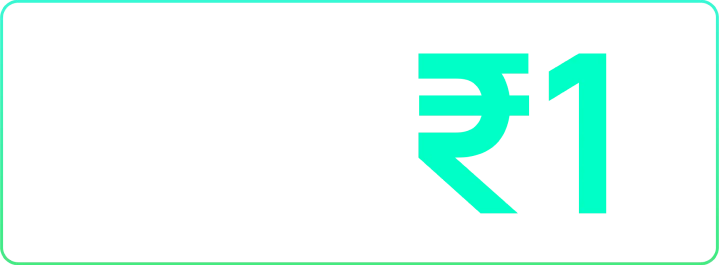
- Shareholders received 1 Piramal Finance share for every 1 PEL share held
- Piramal Finance Limited replaced PEL as the listed entity
No new shares were issued to the public, and no capital was raised. That’s why this was not an IPO, but a listing via merger.
What Happened to Piramal Enterprises Stock Price?
Once the merger took effect:
- Piramal Enterprises Ltd stock price ceased to exist as the company was delisted
- Investors now track the market performance of Piramal Finance Limited
The discovered reference price for Piramal Finance was ₹1,124.20. Understanding concepts like book value vs face value helps investors evaluate whether such opening prices reflect fair valuation during listing events.
Market Debut Performance
- Opened at ₹1,260 on NSE (~12% above reference price)
- Opened at ₹1,270 on BSE
- Closed around ₹1,323, nearly 18% higher than the reference value
This strong response reflected investor confidence in the simplified structure and clarity around the lending business.
What This Meant for Existing Shareholders
If you held Piramal Enterprises shares before the record date, your holdings were automatically converted. Understanding what are shares and their types helps investors navigate corporate actions like mergers and share swaps.
- Your PEL shares automatically converted into Piramal Finance shares
- The swap happened on a 1:1 basis in your demat account
- PEL no longer exists as a listed company
Importantly:
- Piramal Pharma and Piramal Realty were not part of this merger
- They continue to operate separately under the broader Piramal Group
Why Corporate Actions Like This Matter
For investors, this case shows how corporate restructuring can change your portfolio without a buy or sell decision.
Earlier, investors tracking the stock price of Piramal Enterprises were holding:
- A listed holding company
- With exposure to a subsidiary NBFC
After the merger, they now hold:
- A single, consolidated NBFC
- With all lending operations under one roof
This improves transparency and makes financial analysis more straightforward.
A Broader Trend in Indian Financial Markets
Piramal Finance’s listing reflects a larger trend of simplification in India’s financial sector.
Large groups are increasingly:
- Merging holding companies with operating entities
- Reducing layered structures
- Improving regulatory clarity and investor visibility
A well-known parallel is the HDFC Ltd–HDFC Bank merger, where a housing finance company was absorbed into its banking arm to create a unified financial institution.
In Piramal’s case, the result is a well-capitalised, focused NBFC specializing in lending operations. Investors comparing best housing finance stocks should consider how such structural simplifications improve operational clarity and competitive positioning.
Conclusion
Piramal Finance’s listing without an IPO shows that mergers can be an alternative route to stock market listing. By merging Piramal Enterprises into Piramal Finance, the group simplified its structure, aligned with RBI regulations, and created a clearer investment story.
For investors who earlier followed the Piramal Enterprises stock price, the focus has now shifted to Piramal Finance’s performance as a pure-play lending company. This case highlights why understanding corporate actions is just as important as tracking earnings or valuations.
US ETFs represent an excellent opportunity for Indian investors to invest in US stocks from India While both direct US ETF investment and India-based US mutual funds have their merits, direct investment in US ETFs offers superior cost efficiency and better long-term returns for investors willing to navigate the additional complexity.
FAQs on Piramal Enterprises Share Price
Piramal Enterprises was merged into Piramal Finance, making PEL redundant as a listed holding company.
No. Piramal Finance became listed through a merger, not by issuing new shares to the public.
The PEL share price stopped trading after the record date. Investors now track Piramal Finance shares instead
Shares were exchanged on a 1:1 basis. Market pricing adjusted based on investor expectations and the new structure.
No. These businesses remain separate and were not part of the financial services merger.
Disclaimer: Investments in securities markets are subject to market risks. Read all the related documents carefully before investing. The securities quoted are exemplary and are not recommendatory.